
Analysis of WIRobotics: Company Profile, Market Dynamics, and Business Strategy
Published:
Originally published on Substack.
Content
Executive Summary
1. Company Overview: WIRobotics
1.1 Company Background and Vision
1.2 Core Business and Product Portfolio
1.3 Technological Innovations and Industry Recognition
2. Financial Landscape and Investor Profile
2.1 Funding Rounds and Capital Raised
2.2 Key Institutional Investors and Their Contributions
3. Market Analysis: Wearable Robotics and Exoskeletons
3.1 Global Market Size and Growth Projections
3.2 Key Market Drivers
3.3 Market Restraints and Challenges
3.4 Dominant Market Segments and Regional Trends
4. Business Model and Value Proposition
4.1 Target Customer Segments
4.2 Revenue Generation Strategies
4.3 Strategic Vision: "One Person, One Robot" Era
5. Competitive Landscape
5.1 WIRobotics' Position and Competitive Advantages
5.2 Profiles of Key Competitors
6. Supply Chain and Strategic Partnerships
6.1 Vendors and Suppliers
6.2 Research and Development Collaborations
6.3 Global Expansion and Distribution Strategies
7. Challenges and Future Outlook
7.1 Industry-Wide Adoption Challenges and Regulatory Hurdles
7.2 WIRobotics' Strategic Path Forward and Long-Term Goals
Conclusion and Recommendations
Works Reference
Executive Summary
WIRobotics, a South Korean Series A company established in 2021 by a team of former Samsung Robotics Development engineers, is rapidly asserting itself as a significant entity in the global wearable robotics market. The company, with its primary base in Yongin-si and an additional headquarters in Cheonan, South Korea, is dedicated to advancing wearable robots for both movement assistance and industrial applications, while also venturing into the development of general-purpose humanoid robots.
The company's flagship offerings include WIM (We Innovate Mobility), an ultra-lightweight walking assistance robot, and WIBS (We Innovate Back Support), an unpowered exoskeleton designed for industrial use. Furthermore, WIRobotics has recently unveiled ALLEX, a human-responsive humanoid robot, which underscores its ambitious long-term vision for the future of robotics.
Financially, WIRobotics has demonstrated robust investor confidence, securing $12.6 million across two funding rounds (Seed and Series A) from notable institutional investors such as InterVest and Korea Credit Guarantee Fund. This capital infusion supports its technological advancements and market expansion initiatives.
Within the rapidly expanding global wearable robotic exoskeleton market, which is projected to achieve valuations in the tens of billions by 2035, WIRobotics holds a competitive standing, currently ranked 2nd among 38 active competitors by Tracxn. Its emphasis on user-centered design, portability, and the integration of artificial intelligence provides a distinct advantage in this evolving landscape.
Looking ahead, WIRobotics is pursuing an assertive global expansion strategy, with plans to enter the U.S., European, and Japanese markets in 2025. This expansion is supported by anticipated strategic partnerships with global distributors and healthcare providers. The ongoing development of ALLEX further positions the company to capitalize on future opportunities in service, manufacturing, and household automation, aligning with its overarching vision of fostering a "one person, one robot" era.
1. Company Overview: WIRobotics
1.1 Company Background and Vision
WIRobotics Inc. was established in 2021 by a distinguished team, including Co-Founder and CEO Younbaek Lee and Co-CEO and CTO Yong-jae Kim, who also holds a professorship at Korea University of Technology and Education (KOREATECH).1 The founding group comprises four former engineers from Samsung's Robotics Development Team.3 This origin provides WIRobotics with a foundational advantage. The experience gleaned from a global technology leader like Samsung extends beyond mere technical proficiency; it inherently instills robust engineering practices, an understanding of large-scale product development, and access to a network of high-caliber talent. This background likely accelerates the company's research and development cycles and enhances its readiness for market entry, distinguishing it from younger startups that may lack such a comprehensive operational blueprint.
The company maintains its operational presence primarily in Yongin-si, Gyeonggi-do, South Korea, with an additional headquarters located in Cheonan, Chungcheongnam-do.1 This dual location could signify a strategic division, possibly with Yongin-si serving as a core research and development hub or corporate office, while Cheonan functions as an incubation center or a site for more operational activities.
At its core, WIRobotics is driven by the vision of "Technology for People, Enhancing Quality of Life".3 This guiding principle culminates in an ambitious long-term objective: to achieve the "everyday adoption of robots beyond laboratories and industrial sites".3 The company articulates this as moving towards a "one person, one robot" era, emphasizing the seamless integration of cutting-edge technology with practical consumer engagement.9 This aspiration is more than a marketing statement; it signifies a strategic intent to fundamentally transform the perception and utility of robotics. By aiming for ubiquitous personal companionship rather than confining robots to specialized industrial or medical roles, WIRobotics is implicitly committing to developing solutions that are affordable, user-friendly, and deeply integrated into daily routines. Such a trajectory necessitates a long-term research and development roadmap focused on miniaturization, intuitive interfaces, and multi-functional capabilities, as exemplified by the design of their WIM product and the general-purpose nature of ALLEX. This broad vision positions WIRobotics as a potential disruptor, seeking to create entirely new consumer segments for robotics, akin to the widespread adoption of personal computers or smartphones.
1.2 Core Business and Product Portfolio
WIRobotics' primary focus lies in the development of wearable robots engineered to augment human mobility and alleviate physical strain.1 The company's product portfolio demonstrates a clear and calculated dual-market strategy, addressing both immediate, practical needs and long-term, high-potential opportunities.
The current flagship products include:
WIM (We Innovate Mobility): This ultra-lightweight (1.6 kg, including battery) wearable robot is designed to assist walking and promote healthy living through daily exercise.11 Its foldable design enhances portability and storage convenience.11 WIM features an "Assist Mode" that facilitates easier and safer walking by analyzing user-terrain interaction, providing optimal assistance that can result in up to 20% energy savings on flat ground and 14% energy savings when carrying a load, effectively reducing perceived weight by 12 kg.11 Additionally, an "Exercise Mode" offers resistance similar to walking through water, supporting various workout types including cardiovascular, targeted muscle training, and endurance exercises.11 WIM also incorporates motion sensors for posture and balance monitoring and provides personalized AI coaching based on exercise data to enhance performance and motivation.11 Its design prioritizes usability and wearability, allowing for natural, free movement and enabling users to wear it comfortably while driving, sitting, or even lying down.11 WIM made its debut at CES 2024 and was launched in Korea in April 2024, achieving sales of 500 units within eight months.9
WIBS (We Innovate Back Support): This unpowered back support wearable robot is tailored for industrial workers. It is designed to reduce physical strain and can assess and identify motion-related risks in the workplace.1 WIBS was first showcased at CES 2023.4
ALLEX (General-Purpose Humanoid Robot): Unveiled in August 2025, ALLEX represents WIRobotics' foray into general-purpose humanoid robotics, with a strong emphasis on human-like responsiveness.2 Key innovations include a high-degree-of-freedom (DOF) compliant robotic hand (15 DOF, capable of sensing reaction forces as small as 100gf without tactile sensors, and delivering a 40N fingertip force with a 30kg hook grip), a highly backdrivable robot arm with ultra-low friction, and a gravity-compensated upper body.2 ALLEX is engineered for direct interaction with people in diverse settings such as services, manufacturing (including safe load handling), and household tasks like laundry folding.2 The design anticipates its expansion into a modular platform, offering individual components like arms, hands, body, and leader systems for future commercial applications.3
The product strategy, encompassing WIBS, WIM, and ALLEX, reveals a calculated approach to market engagement. WIBS and WIM address immediate, practical needs in the industrial and personal mobility sectors, respectively. These products provide near-term revenue generation and market validation. ALLEX, the humanoid robot, represents a long-term, high-potential venture aimed at future market leadership. This approach balances short-term financial viability with long-term disruptive potential.
A notable aspect of WIRobotics' design philosophy, particularly evident in WIM's ultra-lightweight (1.6 kg) and non-restrictive design 11, is its direct response to a significant industry challenge: the inherent cumbersomeness and weight of many wearable robots.16 By prioritizing a lightweight and non-restrictive form factor, WIRobotics directly addresses a key barrier to widespread adoption. This user-centered research and development focus is explicitly identified by the company as a primary reason for the positive market reception of its products.4 This design choice provides a substantial competitive advantage, especially in consumer and daily-use segments, where comfort and ease of use are paramount. It has the potential to accelerate market penetration by making the technology appealing to a broader user base beyond specialized rehabilitation or heavy industrial applications.
1.3 Technological Innovations and Industry Recognition
WIRobotics places significant emphasis on its proprietary mechanisms and control technologies, which form the bedrock of its product development. This includes the creation of lightweight and flexible robot mechanism designs, compliant actuator and sensor designs, and sophisticated software and control capabilities.5 For the WIM device, this includes a proprietary single actuator system, a feature highlighted as a global first.17 The repeated mention of these proprietary elements suggests that WIRobotics is pursuing a degree of vertical integration or maintaining tight control over the development and manufacturing of its most critical, differentiating components. This approach allows the company to establish a strong intellectual property moat, reducing reliance on external suppliers for core innovations and enabling greater control over product performance and future advancements. This strategy, while potentially more capital-intensive initially, is designed to yield a greater long-term competitive advantage and scalability by ensuring unique capabilities.
ALLEX, the general-purpose humanoid robot, exemplifies WIRobotics' advanced technological capabilities:
High-DOF Compliant Robotic Hand: This human-hand-sized end-effector boasts 15 degrees of freedom, enabling lifelike movements and intricate interactions. It can sense reaction forces and compliantly yield to external loads, detecting forces as minute as 100gf even without tactile sensors. Its grasping performance is notable, delivering 40N fingertip force and over 30kg hook grip.2
Low-Friction, Backdrivable Arm: Achieves human-level adaptability and force-control performance through ultra-low-friction, high-load actuators. This is complemented by a motor-control algorithm that integrates precise position control with force and stiffness control.2
Gravity-Compensated Upper Body: This design feature contributes to safe human-robot interaction, supports high-load operations, and enables precision control.2
Whole-Body Force Control: ALLEX is distinguished as the first inherently compliant humanoid capable of force-based responses across its arms, fingers, and waist without relying on external force sensors. This design optimizes it for machine-learning-based training, ensuring autonomy and scalability.8
WIRobotics' innovations have garnered significant industry recognition. The company has received CES Innovation Awards in Robotics for two consecutive years (2024 and 2025) for its WIM product, which also earned an award in the Accessibility & Aging Tech categories.3 This repeated recognition from a globally renowned platform like CES serves as a powerful strategic asset. It provides international visibility and credibility, significantly easing the marketing burden for a relatively young South Korean startup aiming to penetrate competitive markets such as the U.S..10 The awards function as an independent validation of WIRobotics' technological prowess and design excellence. This validation can accelerate product adoption by consumers and foster partnerships with global distributors and healthcare providers, who often prioritize validated and award-winning solutions. Furthermore, such accolades enhance investor confidence for future funding rounds, contributing to the company's sustained financial health.
2. Financial Landscape and Investor Profile
2.1 Funding Rounds and Capital Raised
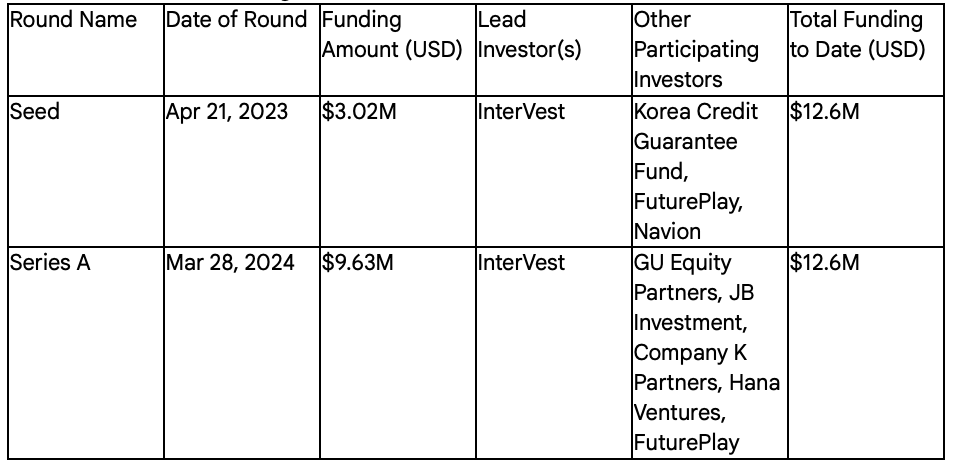
WIRobotics has successfully secured a total of $12.6 million (approximately KRW 13 billion) through two distinct funding rounds.1 While one source indicates $12.8 million, the $12.6 million figure is more consistently reported across the provided information.7
The company's funding history is detailed as follows:
Seed Round (also referred to as Pre-Series A): This initial funding round took place on April 21, 2023, raising $3.02 million (KRW 4 billion). Key investors in this round included Intervest, Korea Credit Guarantee Fund, Futureplay, and Navion.1
Series A Round: Concluded on March 28, 2024, this round successfully secured $9.63 million (KRW 13 billion). InterVest led this investment, with participation from GU Equity Partners, JB Investment, COMPANY K PARTNERS, Hana Ventures, and FuturePlay.1
WIRobotics is currently classified as a Series A company.1 Additional data indicates earlier accelerator/incubator and seed rounds between 2021 and 2024, highlighting a consistent pattern of early-stage financial support.7
2.2 Key Institutional Investors and Their Contributions
WIRobotics has attracted a total of eight institutional investors.1 The prominent investors include:
InterVest: This firm has demonstrated strong, sustained confidence in WIRobotics, leading both the Seed (Pre-Series A) and Series A funding rounds.1
Korea Credit Guarantee Fund: A participant in the Seed round.1
FuturePlay: Also invested in the Seed round.1
GU Equity Partners: Participated in the Series A round.1
Company K Partners: Contributed to the Series A round.1
Hana Ventures: An investor in the Series A round.7
JB Investment: Also participated in the Series A round.1
Navion: Contributed to the Seed round.4
The consistent participation of major Korean institutional investors, particularly InterVest, across multiple funding rounds underscores a significant level of confidence in WIRobotics' long-term potential within the South Korean technology ecosystem. This goes beyond mere financial backing; it suggests a strategic alignment and belief in the company's execution capabilities and vision. The involvement of multiple domestic institutional investors indicates a robust local support network, which is particularly valuable for a startup operating in a capital-intensive sector like robotics. These investors likely contribute more than just capital, potentially offering strategic guidance, network access, and valuable market insights within Korea and the broader Asian region.
The substantial Series A funding of KRW 13 billion ($9.63 million) 1 serves as a direct catalyst for WIRobotics' aggressive market entry and continued investment in advanced research and development. This capital injection is explicitly intended to "accelerate the popularization of wearable robots" 3 and will be allocated towards the development, operational scaling, and marketing activities for WIM, including strategic hiring initiatives.4 Concurrently, it supports ongoing research and development efforts focused on "safe, flexible robotic arms and hands and on bipedal locomotion" for the ALLEX humanoid project.3 The timing and magnitude of this Series A round, occurring just prior to the planned global launch of WIM in the U.S. in 2025 9, indicate a deliberate strategic use of capital to fuel market penetration and expand operational capabilities. The simultaneous funding of advanced humanoid research and development (ALLEX) demonstrates a long-term strategic commitment, leveraging the success of current products to finance future innovation and potentially disruptive technologies.
Table: WIRobotics Funding Rounds Overview
3. Market Analysis: Wearable Robotics and Exoskeletons
3.1 Global Market Size and Growth Projections
The global wearable robotic exoskeleton market is poised for substantial expansion, with various reports projecting significant growth over the coming years. While specific figures exhibit some variation, the consensus points to a rapidly ascending market trajectory:
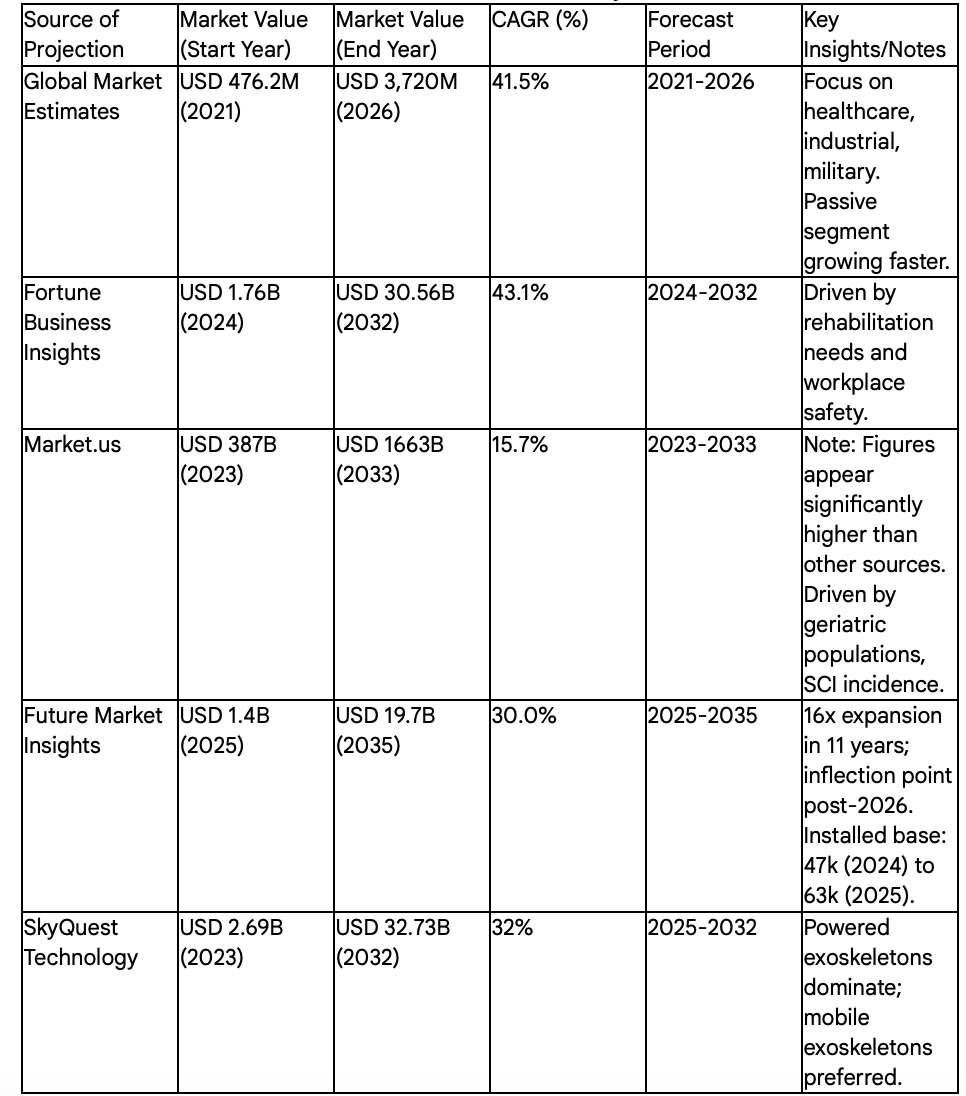
Global Market Estimates (2021-2026): Projects growth from USD 476.2 million in 2021 to USD 3,720 million by 2026, demonstrating a Compound Annual Growth Rate (CAGR) of 41.5%.1
Fortune Business Insights (2024-2032): Values the market at USD 1.76 billion in 2024, forecasting an increase to USD 30.56 billion by 2032, with a CAGR of 43.1%.1
Market.us (2023-2033): Estimates the market at approximately USD 387 billion in 2023, with a projected rise to USD 1663 billion by 2033, at a CAGR of 15.7%.21 It is important to note that this particular projection appears significantly higher than other estimates, potentially indicating a broader definition of the "exoskeleton market" or a reporting discrepancy, as other sources consistently place the market value in the billions, not hundreds of billions.
Future Market Insights (2025-2035): Forecasts a market value of USD 1.4 billion in 2025, expanding to USD 19.7 billion by 2035, with a CAGR of 30.0%. This report highlights a "16x expansion in 11 years" and anticipates an "inflection point post-2026," where the market value is expected to double approximately every three years.22
SkyQuest Technology (2023-2032): Values the global exoskeleton market at USD 2.69 billion in 2023, with a projected growth to between USD 3.55 billion in 2024 and USD 32.73 billion by 2032, at a CAGR of 32%.23
The global installed base of exoskeletons is reported to have surpassed 47,000 units in 2024, with projections indicating an increase to 63,000 units by the end of 2025.22
The consistent high CAGRs, ranging from 30% to 43%, across multiple market analyses 19 collectively indicate that the wearable robotics market is in a phase of rapid growth. The specific mention of an "inflection point post-2026" in some projections 22 suggests that the market is transitioning beyond early adoption into a more widespread commercialization phase. Companies that can establish strong market positions and scalable solutions during this period are well-positioned to benefit significantly from this accelerated growth. This also implies that the technological maturity and cost-reduction efforts for these devices are reaching levels that enable broader market acceptance.
WIRobotics' planned global expansion into the U.S., European, and Japanese markets in 2025 10 is strategically timed to align with this period of anticipated accelerated market growth and the projected inflection point. Launching into these key global markets just before or at the onset of a significant market acceleration allows WIRobotics to capture early market share and establish critical distribution channels ahead of potentially increased competitive saturation.22 This proactive expansion leverages the company's recent funding successes and its notable CES awards. While an aggressive approach, this timing positions WIRobotics to ride the wave of market expansion, potentially leading to exponential growth if its products resonate with international consumers and healthcare providers. However, this also implies that the company will face intense competition as other market participants also vie for share during this high-growth period.
Table: Global Wearable Robotic Exoskeleton Market Projections
3.2 Key Market Drivers
The wearable robotic exoskeleton market's robust growth is propelled by several interconnected factors:
Increasing Rehabilitation Needs: A primary driver is the escalating demand for mobility assistance technologies. This is particularly true for individuals recovering from various conditions, including injuries, surgeries, neurological disorders, strokes, and spinal cord injuries.19 Exoskeletons provide enhanced support during physical therapy, significantly improving the recovery of motor functions and reducing the workload for caregivers.
Aging Global Populations: The demographic shift towards an older global population is a significant catalyst, driving demand for medical equipment and assistive devices that can enhance mobility and improve the quality of life for seniors.21
Workplace Safety and Efficiency: Growing emphasis on occupational safety and operational efficiency, particularly in heavy industries such as manufacturing, construction, and logistics, is boosting the adoption of exoskeletons. These devices augment industrial workers, reduce fatigue, and help prevent musculoskeletal disorders.19 For instance, automotive manufacturers have observed a 15-18% reduction in errors linked to fatigue when using exoskeletons.22
Technological Advancements: Continuous innovation in robotics, including advancements in AI integration, sensor technology, new materials (e.g., 3D printing), and more energy-efficient batteries, is making exoskeletons more adaptable, comfortable, precise, and overall more effective.19
Increased Research and Development Investments: A surge in investments in research and development, particularly evident in regions like Asia Pacific, is fostering the creation of new product innovations and contributing to overall market expansion.19
3.3 Market Restraints and Challenges
Despite the promising growth trajectory, the wearable robotics market faces several significant restraints and challenges that impede broader adoption:
High Costs: The substantial capital investment required for developing and manufacturing exoskeletons translates into high equipment costs. This poses a major barrier to widespread adoption for both individual consumers and healthcare institutions, as initial purchase prices, ongoing maintenance, and training costs are often prohibitive.19
Limited Insurance Coverage: A prevalent issue is the classification of exoskeletons by most insurance providers as experimental or luxury devices rather than essential medical equipment. This lack of financial support restricts usage and limits market growth to a smaller, more affluent customer base.19
Device Weight and Comfort Limitations: Traditional stiff exoskeletons can be cumbersome and heavy, which can hinder natural human movements and compromise user comfort. This ergonomic challenge limits their widespread application, particularly for daily or extended use.16
Regulatory Challenges: Navigating complex regulatory landscapes and obtaining necessary medical approvals presents a significant hurdle for market entry and expansion.21
Limited Awareness and Training: A general lack of widespread public and professional awareness, coupled with the need for specialized training for proper use, can also impede the adoption of these advanced devices.23
WIRobotics' product strategy, particularly its emphasis on ultra-lightweight, user-friendly designs like the 1.6kg WIM 11, directly addresses the "device weight and comfort limitations" that are a major market restraint. By making WIM lightweight and focusing on "daily walking exercise" and "healthy living" 11, WIRobotics strategically positions it as a consumer wellness device rather than solely a complex medical device. This approach could potentially bypass some of the stringent regulatory and insurance reimbursement hurdles typically faced by more specialized medical exoskeletons, thereby opening up a larger, more accessible consumer market. The inclusion of "personal AI coaching" 11 further enhances its consumer appeal, moving it beyond a mere assistive device.
This strategic positioning of WIM points towards a broader trend within the exoskeleton market: the "consumerization" of these devices. This represents a shift from purely industrial or clinical applications towards personal wellness and daily assistance. This is a departure from traditional industrial or clinical-only exoskeletons, suggesting a market evolution where ease of use, aesthetic appeal, and direct personal benefits (such as fitness enhancement or energy savings) become as crucial as clinical efficacy or industrial strength. This consumerization trend, if successful, has the potential to significantly expand the total addressable market for wearable robotics, potentially driving down costs through economies of scale and influencing future insurance coverage models as these devices become more mainstream and are perceived as preventative or quality-of-life enhancements. WIRobotics is actively contributing to and benefiting from this evolving market dynamic.
3.4 Dominant Market Segments and Regional Trends
The wearable robotic exoskeleton market is characterized by several dominant segments and distinct regional trends:
Application Segments:
Healthcare: This sector consistently holds the largest market share, accounting for 51.7% in 2023, and is projected to maintain its dominance. This is primarily driven by increasing rehabilitation needs and substantial investments in research and development for new medical products.19
Industrial: Represents a significant portion of the market, with widespread applications in manufacturing, construction, and logistics, where exoskeletons are used for worker augmentation and safety enhancement.19
Military: A notable segment, particularly for lower body exoskeletons, which constituted 41.9% of overall sales in 2022, primarily for load support applications.19
Other applications, such as aerospace, also contribute to the market.19
Technology Segments:
Powered Exoskeletons: These devices dominate the market, holding a 76.1% share in 2023, owing to their advanced capabilities, including enhanced strength, endurance, and precision.21 WIM, for instance, is a powered exoskeleton.25
Mobile Exoskeletons: These devices command a significant market share (63.56% in 2023, 63.0% in 2025) due to their versatility across various industries.21 WIM is also a mobile exoskeleton.
Lower Body Exoskeletons: These account for a substantial share (43.6% in 2023) due to high demand in mobility assistance, rehabilitation, and labor-intensive industries.21 Both WIM and WIBS fall into the category of lower body or back support exoskeletons.
Passive Exoskeletons: Some forecasts (2021-2026) predict faster growth for this segment due to their lighter weight, lower cost, and ease of handling.19 WIBS is classified as a passive exoskeleton.25
Regional Trends:
North America: Expected to capture the largest market share (38.64% in 2024, 44.8% in 2023), driven by the presence of industry leaders, extensive research and development activities, and significant government spending on healthcare and military sectors.19
Asia Pacific (APAC): Projected to exhibit the highest growth rate, fueled by a rising number of individuals with disabilities, increased investment in research and development, and a flourishing healthcare sector. China, notably, leads this region with a projected 40.5% CAGR.19
Europe: Demonstrates steady growth, with countries like Germany leading the adoption of exoskeletons in medical rehabilitation and manufacturing.22
WIRobotics' product development strategy, with WIM targeting personal mobility and rehabilitation, and WIBS focusing on industrial back support, aligns directly with the dominant healthcare and industrial application segments. Furthermore, their products leverage the prevalent technology types, such as mobile and powered (WIM) and passive (WIBS) lower-body exoskeletons. This strategic alignment positions WIRobotics for maximum market capture, as it directly addresses the needs of the largest and fastest-growing application areas and utilizes the most widely adopted technological approaches. This reduces market entry risk compared to developing products for niche or nascent segments.
WIRobotics' base in South Korea provides a distinct strategic advantage for tapping into the high-growth Asia Pacific market, especially considering China's leading CAGR in the region.22 Being a South Korean company offers cultural, logistical, and potentially regulatory advantages for expanding within APAC. The demonstrated success of WIM in Korea, with 500 units sold 9, provides a strong domestic case study and validation for expansion into other discerning Asian markets. While the company is actively targeting North America and Europe for global expansion 10, its strong regional foundation and early success in Korea suggest the potential for a dual-pronged global and regional expansion strategy. This approach would leverage its home market strengths to penetrate the broader, rapidly growing APAC market, potentially involving tailored product offerings or distribution strategies specific to different Asian countries.
4. Business Model and Value Proposition
4.1 Target Customer Segments
WIRobotics' business model is designed to cater to a diverse range of customer segments, reflecting its overarching vision of "Technology for People, Enhancing Quality of Life".3
Broad Consumer Market: The company aims to serve a wide spectrum of individual users:
Active Young Generation: WIM is positioned to enhance daily mobility and support fitness goals, with its "Exercise Mode" and "Interval Workout Program" specifically catering to this demographic.9
Seniors Seeking Improved Mobility: WIM is designed to make walking easier and more efficient, thereby promoting healthy aging and an active lifestyle for older adults.9
Individuals with Declining Fitness or Muscle Strength: WIM directly addresses the needs of those who find walking challenging due to reduced fitness or muscle strength, assisting them in regaining an active lifestyle comfortably.11
Patients Recovering from Lower-Body Injuries: WIM offers crucial assistance for rehabilitation and regaining mobility post-injury. The company also supports this segment through its "Wearable Robot Gait Training Center".3
Industrial/Workplace Segment:
Industrial Workers: WIBS is specifically developed to provide back support and reduce strain for workers across various industries, including construction, manufacturing, logistics, and defense.1
Workplace Safety Managers/Companies: The capability of WIBS to "gauge and identify the risk of motions in the workplace" 1 suggests a business-to-business (B2B) offering aimed at companies prioritizing occupational health and safety.
Future Humanoid Applications: The development of ALLEX indicates a future expansion into new customer segments. ALLEX is being engineered for applications requiring direct human interaction, such as service industries, manufacturing (with a focus on safe load handling alongside human workers), and household automation (e.g., performing tasks like folding laundry).2 This suggests a future target of both businesses seeking advanced automation solutions and potentially high-end consumer households.
4.2 Revenue Generation Strategies
WIRobotics employs a multifaceted approach to revenue generation, combining direct product sales with service-oriented models and a forward-looking modular component strategy. This hybrid business model allows the company to diversify its revenue streams and adapt to varying market demands.
Direct Product Sales (B2C & B2B):
WIM: This product has been successfully launched in Korea, with B2B sales commencing in February 2024, followed by an enhanced B2C product launch in April 2024.12 The initial success is evident from the sale of over 500 units in Korea.9
WIBS: Primarily marketed for industrial applications, sales of WIBS are likely conducted through B2B channels, targeting companies in sectors such as construction, manufacturing, logistics, and defense.3
Service Centers: WIRobotics has established a 'WIM Walking Exercise Center' near Olympic Park in Korea. This center allows the public to experience their wearable robots firsthand and offers structured walking-health programs.3 This initiative suggests a potential service-based revenue stream, a direct-to-consumer experience model, or a combination of both.
Future Modular Platform Sales: With the unveiling of ALLEX, WIRobotics plans to develop it into a modular platform, enabling the sale of individual components such as arms, hands, body, and leader systems, or combinations thereof.3 This indicates a potential B2B component sales model, targeting other robotics developers or integrators who may wish to incorporate WIRobotics' advanced humanoid components into their own systems.
Strategic Partnerships: The company's strategy includes forming strategic partnerships with global distributors and healthcare providers. These collaborations are intended to broaden its market reach and are expected to drive sales in new international markets.10
The multi-faceted approach to revenue generation provides WIRobotics with significant strategic flexibility. The B2C model for WIM taps into the growing consumer wellness trend, while the B2B sales for WIBS and future ALLEX modules cater to industrial and advanced robotics markets. The service center, beyond being a potential direct revenue stream, also functions as a powerful marketing tool and a valuable data collection point for continuous product improvement. This diversified and flexible approach enhances the company's resilience and expands its overall market reach.
A key aspect of WIM's value proposition is its data-driven capabilities and AI integration. The "Personal AI Coaching" feature and its ability to "Analyze Your Performance and Manage Your Goals" using motion sensor data 11 transform WIM from a simple assistive device into a sophisticated health and fitness tool. This elevates its value beyond basic mobility assistance. This capability positions WIM as a "smart" device offering continuous, personalized value, leveraging the growing market for health technology and personalized wellness solutions. This could potentially pave the way for future subscription-based services or premium features. Furthermore, the collection of valuable user data enables continuous refinement of AI models and further product development. This AI integration serves as a significant competitive differentiator for WIM, distinguishing it from simpler mobility aids and positioning WIRobotics as a leader in intelligent wearable solutions, aligning with the broader market trend of AI advancements driving exoskeleton capabilities.20
4.3 Strategic Vision: "One Person, One Robot" Era
WIRobotics' strategic vision culminates in the ambitious goal of realizing a "one person, one robot" era, where robots seamlessly enhance daily life and transition from specialized tools to ubiquitous companions for everyone.3 This overarching objective shapes all aspects of the company's development and market approach.
Central to this vision is the concept of human-robot coexistence. The company explicitly states its commitment to developing robot technology that "helps humans and coexists with them, not replaces them," emphasizing interactive robotics.4 ALLEX's design, with its human-like responsiveness and compliant interaction capabilities, is a direct manifestation of this philosophy.2 The emphasis on safety and natural interaction is paramount for widespread adoption.
Achieving this ubiquitous presence necessitates a strong focus on accessibility and comfort. The design philosophy underpinning products like WIM, which prioritizes ultra-lightweight, comfortable, and easy-to-use features, is integral to enabling mass adoption.4
The ambitious "one person, one robot" vision and the focus on human-robot coexistence 3 function as a powerful strategic differentiator beyond mere product specifications. This compelling vision positions WIRobotics as a company with a profound societal mission, which can attract mission-driven employees, foster a strong company culture, and appeal to investors seeking long-term, impactful ventures. It also provides a clear guiding principle for all research, development, and product design decisions, ensuring consistency across its diverse product lines.
Furthermore, by establishing a "Wearable Robot Gait Training Center" and operating public walking-health programs 3, WIRobotics is proactively addressing potential societal acceptance challenges and building public familiarity with wearable robotics. This initiative extends beyond traditional marketing; it is about normalizing the use of wearable robots and cultivating trust and familiarity among potential users. This direct engagement helps to overcome market restraints such as "limited awareness and training requirements".23 This hands-on engagement strategy is particularly crucial for a technology that requires direct physical interaction. It enables WIRobotics to gather immediate user feedback, refine products for real-world usability, and preemptively address public concerns about safety or intrusiveness, thereby paving the way for broader societal adoption of its "one person, one robot" vision.
5. Competitive Landscape
5.1 WIRobotics' Position and Competitive Advantages
WIRobotics has rapidly established a strong competitive standing within the wearable robotics sector. It is currently ranked 2nd among 38 active competitors in its domain, holding a Tracxn Score of 45/100.1 This position, particularly given its relatively recent founding, underscores its effective strategy and technological prowess.
WIRobotics' competitive advantages stem from several key areas:
User-Centric Design: The company's commitment to ultra-lightweight (WIM at 1.6kg), compact, foldable, and non-restrictive designs for natural movement and comfort directly addresses a significant market restraint concerning device cumbersomeness and weight.4 This focus enhances user adoption and satisfaction.
Proprietary Technology: WIRobotics develops unique mechanisms, compliant actuators, and advanced control technologies, including a proprietary single actuator system for WIM.5 This internal development of core components allows for superior performance and differentiation.
AI Integration: WIM incorporates personal AI coaching and performance analysis 11, transforming it into an intelligent health and fitness tool. ALLEX is specifically optimized for machine-learning-based training and features inherent compliance for safe human-robot interaction 8, positioning the company at the forefront of AI-driven robotics.
Dual-Product Strategy: Offering both industrial (WIBS) and personal mobility (WIM) solutions diversifies its market reach and revenue streams, providing resilience and broader appeal.
Humanoid Robotics Innovation: The unveiling of ALLEX signals WIRobotics' entry into the high-potential general-purpose humanoid market, positioning it as a forward-thinking innovator beyond specialized exoskeletons.2
Strong Founding Team: The team's background as former Samsung Robotics Development Team engineers provides deep expertise, a strong engineering foundation, and significant credibility within the industry.3
CES Innovation Awards: Consecutive recognition from CES (2024, 2025) enhances brand reputation, validates technological excellence, and provides a powerful marketing tool for global expansion.3
5.2 Profiles of Key Competitors
WIRobotics operates within a dynamic competitive landscape, facing established players and emerging innovators.
German Bionic System (Germany):
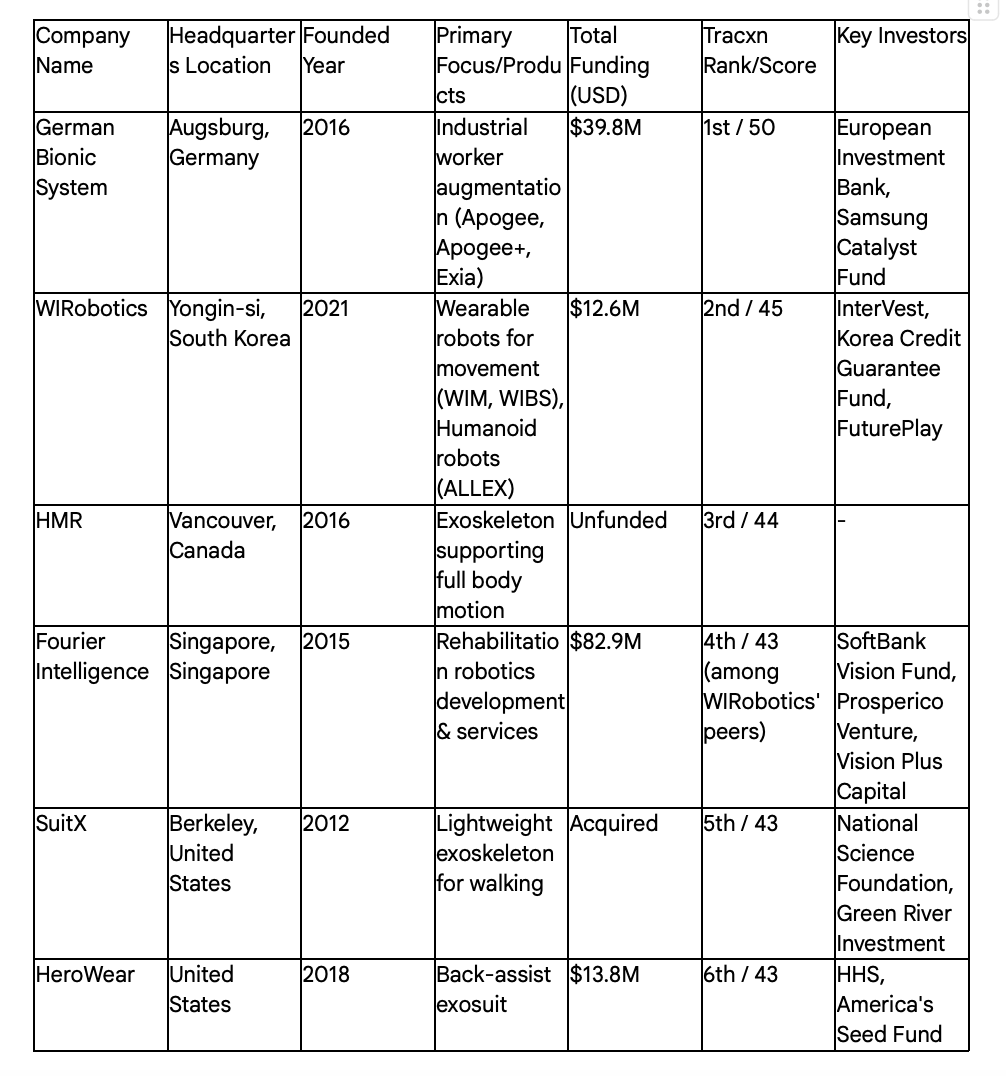
Rank: This company holds the top position among WIRobotics' direct competitors, with a Tracxn Score of 50/100.1
Focus: German Bionic System specializes in exoskeleton systems for industrial worker augmentation, developing smart power suits aimed at improving workplace safety, efficiency, and ergonomics.1
Funding: It has raised $39.8 million in funding.1
Products: Its core product line includes the Apogee and Apogee+ exoskeletons, which are AI-powered and integrate with the German Bionic IO platform for real-time data monitoring. In May 2025, they launched Exia, touted as the world's first exoskeleton powered by true Augmented AI.23
Market Position: German Bionic is a leading European robotics company with a strong presence in both industrial and healthcare sectors. Germany itself is a dominant market in Europe for exoskeletons.23
Fourier Intelligence (Singapore):
Rank: Fourier Intelligence is ranked 4th among WIRobotics' direct competitors (Tracxn Score 43/100), though it ranks 14th within its broader set of 135 competitors.1
Focus: The company is a prominent provider of rehabilitation robotics development and services, specializing in intelligent medical rehabilitation robots.1
Funding: Fourier Intelligence has secured substantial funding, raising $82.9 million over seven rounds. This includes a significant $63.1 million Series D round led by SoftBank Vision Fund in January 2022.1
Market Position: It has established a strong global presence in the medical rehabilitation market, characterized by a comprehensive product portfolio and robust capabilities in both hardware and algorithms.27
HMR (Canada):
Rank: HMR is ranked 3rd among WIRobotics' competitors, with a Tracxn Score of 44/100.1
Focus: The company develops exoskeletons designed to support the full range of body motion.1
Funding: Notably, HMR is currently unfunded according to available information.1
Other Notable Competitors: The competitive landscape also includes companies such as SuitX (US), known for lightweight walking aids; HeroWear (US), a manufacturer of back-assist exosuits; Xeno Dynamics (China), which develops multi-industry exoskeleton robots; Agadexo Exoskeleton (Italy), providing wearable robotic devices; Levitate Technologies (US), focusing on industrial worker exoskeletons; and Skelex (Netherlands), a company that has raised funding.1
ReWalk Robotics (US):
Market Capitalization: This company has a relatively small market capitalization of $11.02 million as of August 2025, and has experienced a 5-year CAGR of -14.55%.28
Focus: ReWalk Robotics is recognized for its exoskeletons designed for paraplegics and gait training.21
Status: While analysts have issued a "buy" rating, its market capitalization and historical performance suggest it is a smaller player, potentially facing challenges, especially when compared to the overall growth of the wearable robotics market.28
WIRobotics' standing is particularly noteworthy given its funding relative to its top competitors. With $12.6 million in funding, WIRobotics ranks 2nd, while German Bionic has $39.8 million and Fourier Intelligence has $82.9 million.1 This suggests that WIRobotics is operating with high capital efficiency or has identified a particularly strong product-market fit, such as the lightweight, consumer-friendly WIM, which allows it to gain traction rapidly without requiring as much capital as competitors focused on more complex or niche industrial/medical solutions. The Samsung pedigree of its founders likely contributes to this operational efficiency and product focus.
The unveiling of ALLEX by WIRobotics, a "general-purpose humanoid robot" 2, signals an intensifying competitive dynamic in the broader robotics sector. This strategic move extends beyond wearable exoskeletons, positioning WIRobotics to compete with a different set of advanced robotics companies, some of whom may also be component suppliers (e.g., Agility Robotics, Apptronik mentioned in a general supplier context 30). The "general-purpose" nature of ALLEX implies a much broader applicability across various sectors, including services, manufacturing, and household tasks.2 This is a more ambitious and potentially lucrative long-term play than specialized exoskeletons. The success in this emerging segment will be heavily dependent on advancements in artificial intelligence, robotic dexterity, and cost-effectiveness. WIRobotics' collaborations with AI startups and academic institutions to enhance ALLEX's intelligence 2 are crucial for this future competitive battle, demonstrating an understanding that advanced hardware alone will not suffice.
Table: WIRobotics Key Competitors and Market Position
6. Supply Chain and Strategic Partnerships
6.1 Vendors and Suppliers
The wearable robotics industry, by its nature, relies on a sophisticated and interconnected supply chain for various specialized components. This includes, but is not limited to, actuators, a range of sensors (force/torque, motion), intricate control systems, reliable power sources (such as batteries), advanced materials (like lightweight alloys and specialized textiles), and robust software frameworks.5 General suppliers in the broader humanoid robotics space include companies like Harmonic Drive LLC for actuators, Xsens for motion tracking, FUTEK for force/torque sensors, Maxon for motors and drive systems, and Real-Time Innovations for software connectivity solutions.30
While the provided information does not explicitly name WIRobotics' specific manufacturing vendors or component suppliers, it consistently highlights the company's "proprietary mechanisms and control technologies" 5 and specifically mentions a "proprietary single actuator system" for WIM.17 This repeated emphasis suggests that WIRobotics is strategically pursuing a degree of vertical integration or maintaining deep control over the development and manufacturing of its most critical, differentiating components. This approach allows WIRobotics to establish and maintain a strong competitive moat by controlling the intellectual property and performance characteristics of its key components. It mitigates reliance on external suppliers for critical innovations, ensuring product differentiation and potentially better cost control over time for these unique parts. This also indicates a preference for high-performance, custom-engineered solutions rather than relying solely on mass-produced generic parts.
For non-proprietary components, it can be inferred that WIRobotics likely sources from industry-standard suppliers, similar to those listed in general directories for humanoid robotics components.30 The company's strong focus on ultra-lightweight design, as seen in WIM 11, implies a significant emphasis on advanced materials and miniaturized electronics, which would heavily influence its selection criteria for external suppliers.
While proprietary development undeniably strengthens intellectual property, the absence of explicit external manufacturing partners for core components could present challenges related to scalability and supply chain resilience, particularly if production volumes need to increase rapidly. WIM's initial sales of 500 units in Korea 9 are a promising start, but the company's ambitious global expansion plans 10 will necessitate significantly higher production. As WIRobotics scales globally and pursues its "one person, one robot" vision for mass adoption, relying solely on in-house or undisclosed proprietary manufacturing for critical components could become a bottleneck. To meet escalating demand efficiently and cost-effectively, it will likely become essential to either substantially expand its own manufacturing capabilities or forge strategic, long-term partnerships with contract manufacturers capable of handling high-volume production of its proprietary designs while maintaining stringent quality control and cost efficiency. This aspect of the supply chain will be a critical area for future strategic development.
6.2 Research and Development Collaborations
WIRobotics actively cultivates a robust network of research and development collaborations, particularly for its advanced ALLEX humanoid robot project. This extensive ecosystem of academic and AI startup partnerships 2 demonstrates a proactive strategy to leverage external expertise and remain at the forefront of robotics and artificial intelligence advancements.
Academic Partnerships: The company maintains strong ties with leading academic and research institutions. Co-CEO Yong-Jae Kim's professorship at Korea University of Technology and Education (KOREATECH) provides a direct link, and ALLEX was notably unveiled at the Robot Innovation Hub (RIH) located on the KOREATECH campus.2 Further collaborations include renowned institutions such as MIT, UIUC, UMass, and KIST (Korea Institute of Science and Technology).2
AI Innovator Partnerships: A strategic partnership has been formed with RLWRLD, a "physical AI startup," specifically to enhance ALLEX's machine learning capabilities and develop its intelligence.2
Component/Technology Partners: Maxon is also mentioned as a collaborator, likely contributing expertise or components related to advanced motor or drive systems.2
Open Innovation Ecosystem: WIRobotics is actively building an open innovation ecosystem to foster the convergence of robotics and AI.8 The Robot Innovation Hub, opened in June 2024, serves as a dedicated space for collaboration with both Korean and international research institutions.3
In rapidly evolving fields like robotics and AI, no single company can possess all the necessary expertise internally. These collaborations allow WIRobotics to access cutting-edge research, specialized AI capabilities (such as physical AI from RLWRLD), and diverse talent pools from top global institutions. This is crucial for developing complex systems like ALLEX and maintaining a technological lead in a highly competitive environment. This collaborative approach also helps in minimizing the "sim-to-real gap" for machine learning-based training, a critical challenge in robotics development.14
By partnering with academic institutions and leveraging their research infrastructure, such as KOREATECH's Robot Innovation Hub 2, WIRobotics can potentially reduce its direct research and development expenditures. This strategy partially mitigates the "high capital costs" that are a recognized market restraint for exoskeleton development.19 Academic partnerships often involve shared research, access to university laboratories, and opportunities for joint funding, which can significantly lessen the financial burden of fundamental and applied research for the company. This allows WIRobotics to extend the utility of its venture capital funding. This collaborative R&D model represents a strategic way to optimize resource allocation, enabling the company to focus its internal resources on product commercialization while external partners contribute to foundational research and advanced technology development, thereby accelerating innovation without solely bearing the full financial weight.
6.3 Global Expansion and Distribution Strategies
Following a successful debut in South Korea, where 500 units of WIM were sold 9, WIRobotics is embarking on an ambitious global expansion. The company is set to launch WIM in the U.S. market in January 2025 1, with further plans to enter the European and Japanese markets within 2025.10
WIRobotics is adopting a phased approach to global market entry. This strategy begins with its proven WIM product in key Western and Asian markets, while simultaneously laying the groundwork for future humanoid commercialization. This phased strategy is designed to minimize risk by first demonstrating market fit and scalability with a more mature product (WIM) in new geographies. The success of WIM generates current revenue and builds brand recognition, which can then be leveraged to support the more complex and capital-intensive commercialization of humanoid platforms like ALLEX, which will likely require different distribution models, such as enterprise sales or specialized integrators.
The company's strategy for international expansion explicitly involves forming "strategic partnerships with global distributors and healthcare providers" to broaden its international reach.10 This focus on strategic channel partnerships is a critical approach to overcoming various market barriers, including "limited awareness and training requirements" and potentially "limited insurance coverage" in new regions.19 Distributors provide established sales networks, logistical infrastructure, and crucial local market knowledge, thereby reducing WIRobotics' operational overhead and accelerating market entry. Partnerships with healthcare providers are vital for gaining clinical validation, facilitating adoption in rehabilitation settings, and potentially influencing future insurance reimbursement policies. These partners can also provide the necessary training and ongoing support for complex medical devices.
WIRobotics is also leveraging its recent accolades, specifically the CES Innovation Awards received in 2024 and 2025, as a testament to its innovation and proven success in the Korean market. These awards serve as a powerful credential to facilitate entry into new global markets.9 For ALLEX, the humanoid platform, the plan is to expand the distribution of research platforms and broaden global commercialization partnerships in stages, building a foundation through field demonstrations in various industries.3 This strategic approach to ecosystem building in new markets is crucial for long-term success. By leveraging existing infrastructure and expertise, WIRobotics can more effectively navigate regulatory complexities, build trust with local consumers and institutions, and establish the necessary support systems for its products, which is vital for sustained growth in the global wearable robotics market.
7. Challenges and Future Outlook
7.1 Industry-Wide Adoption Challenges and Regulatory Hurdles
Despite the rapid growth projected for the wearable robotics market, several industry-wide challenges continue to impede widespread adoption:
High Costs & Insurance: The significant cost associated with wearable robots, coupled with limited or non-existent insurance coverage, remains a primary barrier for both individual consumers and healthcare institutions.19
Device Limitations: Fundamental challenges persist in mechanical design (creating compact, lightweight structures that do not impede natural human movement), actuation, sensing capabilities, effective body interfaces, precise control, seamless human-robot interfacing, and coadaptation.16 High-torque stiff exoskeletons, in particular, often remain cumbersome and heavy.16
Regulatory Landscape: Navigating the complex regulatory environment and obtaining necessary medical approvals presents a significant hurdle for companies operating in the exoskeleton market.21
Awareness & Training: A lack of widespread public and professional awareness, combined with the need for specialized training for proper device operation, can also hinder adoption rates.23
Public Perception: While WIRobotics envisions human-robot coexistence, the broader public sentiment towards advanced robotics, especially humanoids, can be mixed. Some public commentary, for instance, expresses skepticism regarding the immediate real-world utility of devices like ALLEX, questioning whether current demonstrations move beyond "pre-programmed movements" to true "adaptability and flexibility".13
The market for wearable robotics faces a fundamental dilemma, often referred to as the cost-performance-accessibility trilemma. This involves the challenge of simultaneously achieving high performance (e.g., strength, precision), maintaining affordability, and ensuring broad accessibility (e.g., lightweight design, ease of use, and insurance coverage). Improving performance frequently leads to increased costs. Conversely, reducing costs can compromise performance or necessitate mass production, which in turn requires widespread adoption. However, achieving widespread adoption is often hindered by the very issues of high cost and limited insurance coverage. This creates a feedback loop where progress in one area impacts the others. WIRobotics' strategic focus on lightweight and user-friendly design for WIM is a deliberate attempt to address this trilemma by prioritizing accessibility and consumer appeal, with the potential to drive down costs through increased sales volume.
For advanced humanoid robots like ALLEX, the transition from controlled laboratory demonstrations to truly adaptable, real-world functionality (e.g., autonomously folding laundry, as a user might desire 13) represents a significant, yet largely unsolved, challenge, despite impressive hardware capabilities. Public commentary highlights a critical gap between the advanced mechanical capabilities of ALLEX (e.g., its high-DOF hand, backdrivable arm, whole-body force control) and the necessary artificial intelligence and software autonomy required for true general-purpose functionality in unstructured environments. The "sim-to-real gap" in machine learning training is a recognized difficulty in this field.14 WIRobotics' strategic partnerships with physical AI startups such as RLWRLD and leading academic institutions 2 are direct responses to this challenge. The ultimate success of ALLEX and the broader "one person, one robot" vision hinges on the ability to bridge this gap, enabling robots to be truly intelligent and adaptable, not merely mechanically capable. This will be a key determinant of WIRobotics' long-term success in the burgeoning humanoid market.
7.2 WIRobotics' Strategic Path Forward and Long-Term Goals
WIRobotics' strategic path forward is characterized by a clear balance between immediate market capture and long-term, high-risk, high-reward innovation. The company's plans are multi-faceted:
Global Market Penetration: WIRobotics is aggressively expanding its presence, with WIM slated for launch in the U.S. market in January 2025, followed by entry into European and Japanese markets within the same year. This expansion will be facilitated by strategic partnerships with global distributors and healthcare providers.10
Humanoid Platform Development: The company will continue its intensive research and development on ALLEX, with plans to evolve it into a modular platform comprising arms, hands, body, and leader systems. The goal is to commercialize this platform through field demonstrations in various industries.3
Open Innovation Ecosystem: WIRobotics is committed to fostering collaborations with leading research institutions and AI innovators, such as RLWRLD, to promote the convergence of robotics and AI. This strategy aims to ensure technical leadership in general-purpose humanoid platforms.2
User-Centric Popularization: The company will maintain its focus on user-centered research and development, prioritizing usability and wearability. The objective is to continually introduce lighter, more comfortable, and easier-to-use wearable robot products.4 The operation of the WIM Walking Exercise Center is an integral part of this strategy, facilitating direct user engagement and feedback.3
Long-Term Vision: WIRobotics' ultimate goal is to realize the "everyday adoption of robots" by 2030. This includes delivering a "general-purpose humanoid platform that anyone can use in everyday life," ushering in a new era of robotics where precision and flexibility coexist, and humans and robots interact safely.2
This strategic path demonstrates a well-managed product pipeline. WIM, as the current revenue generator, provides the financial and reputational capital necessary to fund the more speculative, long-term development of ALLEX. This approach mitigates risk by avoiding a singular focus on an unproven futuristic product, distributing resources while maintaining an ambitious innovation agenda.
Furthermore, WIRobotics' strategy extends beyond mere product sales to building a comprehensive ecosystem around its technology. This encompasses the establishment of training centers, fostering academic collaborations, and developing modular platforms. This "ecosystem play" is crucial for achieving the "one person, one robot" vision. It facilitates widespread training and familiarity with their products, encourages further innovation by external parties utilizing their modular platforms, and positions WIRobotics as a foundational technology provider, rather than solely a product vendor. This comprehensive approach has the potential to accelerate market growth beyond what direct sales alone could achieve. By actively shaping the environment in which its robots operate, WIRobotics aims to establish itself as a market leader and standard-setter, influencing the direction of the broader wearable and humanoid robotics industry. This proactive approach to market development is a hallmark of truly disruptive companies.
Conclusion and Recommendations
WIRobotics stands as a dynamic and strategically astute South Korean startup, exceptionally positioned for significant impact within the rapidly expanding wearable robotics and exoskeleton market. Its foundation, built upon a strong team of former Samsung Robotics Development engineers, has enabled the company to secure substantial early-stage funding and rapidly develop a compelling product portfolio.
The company's core strength lies in its dual-market product strategy, offering both practical industrial solutions (WIBS) and innovative personal mobility devices (WIM), while simultaneously investing in the long-term, high-potential domain of general-purpose humanoid robotics (ALLEX). This diversified approach ensures immediate revenue streams and market validation, funding the ambitious research and development necessary for future market disruption. WIRobotics' user-centric design philosophy, particularly evident in WIM's ultra-lightweight and accessible nature, directly addresses critical market restraints such as device comfort and cost, positioning it favorably for broad consumer adoption.
The consistent high growth projections for the wearable robotics market, coupled with WIRobotics' strategic timing for global expansion into key regions like the U.S., Europe, and Japan, suggest a calculated move to capitalize on an anticipated market inflection point. The company’s ability to achieve a high competitive ranking with comparatively less funding than some peers underscores its capital efficiency and effective product-market fit.
WIRobotics' proactive engagement in building an open innovation ecosystem through academic and AI startup collaborations is a critical enabler for its advanced humanoid ambitions. This collaborative R&D model allows the company to access cutting-edge expertise and mitigate the inherent high capital costs of robotics development. Furthermore, its emphasis on establishing public training centers demonstrates a forward-thinking approach to fostering societal acceptance and overcoming adoption barriers.
Recommendations:
Prioritize Scalable Manufacturing Partnerships: As WIRobotics pursues aggressive global expansion and aims for mass adoption, securing strategic partnerships with high-volume contract manufacturers for its proprietary components will be crucial. This will ensure that production can scale efficiently to meet increasing demand without compromising quality or cost-effectiveness.
Continue Investment in AI and Software Autonomy for ALLEX: While ALLEX's hardware is impressive, its long-term success and the realization of the "one person, one robot" vision depend heavily on advancements in its AI and software capabilities for true real-world adaptability. Sustained investment in physical AI research and development, potentially through expanded partnerships, is paramount to bridge the gap between mechanical capability and intelligent, autonomous functionality.
Explore Diversified Revenue Models for WIM: Beyond direct sales, WIRobotics should explore subscription-based models for WIM's AI coaching and data analysis features, or partnerships with wellness programs and insurance providers to increase accessibility and recurring revenue streams, further mitigating the high cost and limited insurance coverage challenges.
Tailor Global Market Entry Strategies: While broad geographic expansion is planned, a nuanced approach to each market (U.S., Europe, Japan) will be beneficial. This may involve specific product adaptations, localized marketing, and tailored distribution channels that account for regional regulatory environments, healthcare systems, and consumer preferences.
Leverage Ecosystem Building for Market Leadership: Continue and expand initiatives like the 'WIM Walking Exercise Center' and the 'Robot Innovation Hub'. These efforts not only drive product familiarity and adoption but also position WIRobotics as a thought leader and a central player in shaping the future of human-robot interaction and the broader robotics ecosystem.
Reference:
WiRobotics - 2025 Company Profile, Team, Funding & Competitors ..., accessed August 20, 2025, https://tracxn.com/d/companies/wirobotics/__N3o0hmoveePY9q1qrjpun-m7zZt1pNpJY8NFrCvvPrw
WIRobotics Reveals ALLEX: A Human-Responsive Humanoid Built for Real-World Impact, accessed August 20, 2025, https://stupiddope.com/2025/08/wirobotics-reveals-allex-a-human-responsive-humanoid-built-for-real-world-impact/
WIRobotics Unveils 'ALLEX,' a General-Purpose Humanoid with Human-Like Responsiveness - Laotian Times, accessed August 20, 2025, https://laotiantimes.com/2025/08/18/wirobotics-unveils-allex-a-general-purpose-humanoid-with-human-like-responsiveness/
WiRobotics raises KRW 4 billion in pre-Series A funding for its wearable robots - Wowtale, accessed August 20, 2025, https://en.wowtale.net/2023/04/21/56252/
WIRobotics - CES 2025, accessed August 20, 2025, https://exhibitors.ces.tech/8_0/exhibitor/exhibitor-details.cfm?exhid=0014V00002uhRZNQA2
notice - WIRobotics, accessed August 20, 2025, https://www.wirobotics.co.kr/en/notice.php
Wirobotics 2025 Company Profile: Valuation, Funding & Investors | PitchBook, accessed August 20, 2025, https://pitchbook.com/profiles/company/497814-31
WIRobotics Unveils 'ALLEX,' a General-Purpose Humanoid with Human-Like Responsiveness - The Korea Herald, accessed August 20, 2025, https://www.koreaherald.com/article/10556360
Wearable Robotics Leading Company WIRobotics to Introduce Ultra-Lightweight Walking Assistance Wearable Robot WIM to the US Market, accessed August 20, 2025, https://www.wirobotics.com/media/newsDetail?pageType=01&idx=43
South Korea's WIRobotics Takes the Spotlight at CES 2025, Plans ..., accessed August 20, 2025, https://www.prnewswire.com/news-releases/south-koreas-wirobotics-takes-the-spotlight-at-ces-2025-plans-global-expansion-302350400.html
WIRobotics WIM | Physioparts.ie, accessed August 20, 2025, https://www.physioparts.ie/wirobotics-wim
WIRobotics Secures KRW 13 Billion in Series A for Wearable Robot Innovation - Wowtale, accessed August 20, 2025, https://en.wowtale.net/2024/03/28/222839/
WIRobotics Unveils ALLEX Humanoid Robot with Human-Like Responsiveness - Reddit, accessed August 20, 2025, https://www.reddit.com/r/singularity/comments/1mtmhsl/wirobotics_unveils_allex_humanoid_robot_with/
WIRobotics Unveils 'ALLEX,' a General-Purpose Humanoid with Human-Like Responsiveness - TNGlobal - TechNode Global, accessed August 20, 2025, https://technode.global/prnasia/wirobotics-unveils-allex-a-general-purpose-humanoid-with-human-like-responsiveness/
WIRobotics Unveils 'ALLEX,' a General-Purpose Humanoid with Human-Like Responsiveness - PR Newswire, accessed August 20, 2025, https://www.prnewswire.com/news-releases/wirobotics-unveils-allex-a-general-purpose-humanoid-with-human-like-responsiveness-302532078.html
Challenges and solutions for application and wider adoption of wearable robots - PMC, accessed August 20, 2025, https://pmc.ncbi.nlm.nih.gov/articles/PMC10936284/
Wearable Robotics Leading Company WIRobotics to Introduce Ultra-Lightweight Walking Assistance Wearable Robot WIM to the U.S. Market - Thailand Business News, accessed August 20, 2025, https://www.thailand-business-news.com/pr-news/wearable-robotics-leading-company-wirobotics-to-introduce-ultra-lightweight-walking-assistance-wearable-robot-wim-to-the-u-s-market
2025 Funding Rounds & List of Investors - WiRobotics - Tracxn, accessed August 20, 2025, https://tracxn.com/d/companies/wirobotics/__N3o0hmoveePY9q1qrjpun-m7zZt1pNpJY8NFrCvvPrw/funding-and-investors
Global Wearable Robotic Exoskeleton Market Analysis | Size, accessed August 20, 2025, https://www.globalmarketestimates.com/market-report/wearable-robotic-exoskeleton-market-3415
Wearable Robotic Exoskeleton Market Size, Share [2025-2032] - Fortune Business Insights, accessed August 20, 2025, https://www.fortunebusinessinsights.com/wearable-robotic-exoskeleton-market-104664
Exoskeleton Market Size, Share, Trends | CAGR of 15.7%, accessed August 20, 2025, https://market.us/report/exoskeleton-market/
Exoskeleton Market | Global Market Analysis Report - 2035, accessed August 20, 2025, https://www.futuremarketinsights.com/reports/exoskeleton-market
Exoskeleton Market Size, Share, Trends & Forecast 2032 - SkyQuest Technology, accessed August 20, 2025, https://www.skyquestt.com/report/exoskeleton-market
MarketsandMarkets' 360Quadrants Recognizes Top Startups and SMEs in the Exoskeleton Startups Quadrant Report 2025 - PR Newswire, accessed August 20, 2025, https://www.prnewswire.com/news-releases/marketsandmarkets-360quadrants-recognizes-top-startups-and-smes-in-the-exoskeleton-startups-quadrant-report-2025-302533303.html
WIRobotics Archives - Exoskeleton Report, accessed August 20, 2025, https://exoskeletonreport.com/product-tag/wirobotics/
Fourier Intelligence - 2025 Company Profile, Team, Funding & Competitors - Tracxn, accessed August 20, 2025, https://tracxn.com/d/companies/fourier-intelligence/__psPIjhM8w5QF7nLa7Q93hKsgcmTKNly4pE8iyEui0ss
Fourier Intelligence Completes RMB 400 Million Series D Financing - Prosperity7VC, accessed August 20, 2025, https://www.prosperity7vc.com/fourier-intelligence-completes-rmb-400-million-series-d-financing%EF%BF%BC/
ReWalk Robotics (RWLK) Market Cap Today: Live Data & Historical Trends, accessed August 20, 2025, https://public.com/stocks/rwlk/market-cap
ReWalk Robotics Stock Price | LFWD Stock Quote, News, and History | Markets Insider, accessed August 20, 2025, https://markets.businessinsider.com/stocks/lfwd-stock
Suppliers of Humanoid Robotics Systems, Sub-Systems or Components, accessed August 20, 2025, https://humanoidroboticstechnology.com/suppliers/