
The short life of the Humane AI Pin — and what first-time founders should learn from it
Published:
Originally published on Substack.
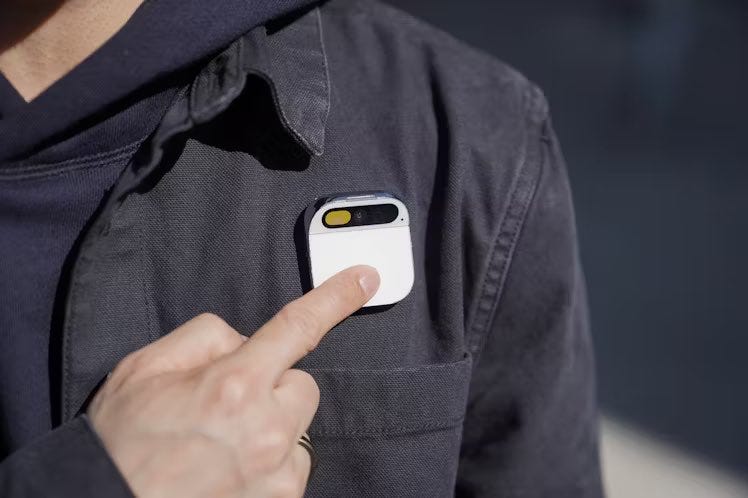
Humane’s AI Pin was one of the cleanest examples in recent memory of how a brilliant founding story, deep domain pedigree, and massive funding still can’t rescue a product that misreads the market, under-tests core assumptions, and lets marketing outpace engineering. I have launched hardware and services in my past startups, here I would like share my views.
It’s actually a very good example for first time founders: Fail Faster !
Quick timeline & facts
Humane was founded by Imran Chaudhri and Bethany Bongiorno (both ex-Apple). Chaudhri is widely known for early iPhone UI work; Bongiorno led iOS/macOS engineering teams.
Humane announced an early Series A led by Sam Altman (and Lachy Groom) — PR materials show a $30M Series A announced on Sept 25, 2020 — and later raised rounds that brought total disclosed funding to roughly $230M.
The AI Pin launched into the market in 2024 as a screenless, chest-worn wearable with a camera, microphone, projector, and a magnet-style battery booster. It used its own cellular connection and an online AI service (CosmOS / “Cosmos” in later materials) and carried a premium price and subscription. Initial retail price was $699 plus a $24/month subscription; the company later cut price to $499 amid weak sales.
The product suffered safety and reliability issues: Humane recalled about 10,500 charging-case accessories in late October 2024 due to a lithium-battery overheating risk.
Reviews and early user reports were overwhelmingly negative: slow responses, flaky AI and call/message reliability, and high return rates were widely reported.
In February 2025 Humane announced it would stop selling the AI Pin and would cease the cloud services that powered it; existing devices were scheduled to stop connecting to Humane’s servers on February 28, 2025 (local times reported as 12 p.m. PST / 3 p.m. ET). HP agreed to buy key software, IP (including the CosmOS platform) and talent for $116 million. Humane’s assets sale and service shutdown were described in the company/press releases and press coverage.
What happened
Humane started with a strong narrative: two senior ex-Apple people building “what comes after the smartphone.” They raised lots of capital and assembled a mostly ex-Apple product team. The AI Pin sought to replace the phone by combining a voice-first AI stack, sensors and a small projection system into a wearable that would keep you “present.”
But the market cares about results, not narratives. After launch the device repeatedly underdelivered: voice and AI responses were slow or wrong, basic communications were unreliable, and the novel interaction model (a chest-worn, screenless device) introduced new usability friction rather than removing it. Negative reviews from major outlets and creators amplified customer disappointment. Returns reportedly outpaced sales at points, a charging-case recall added reputational damage, and a price cut in October 2024 didn’t reverse momentum. Within a year the company sold its IP and people to HP for $116M and shut down consumer services.
Root causes
Product–market fit was not validated at scale — an experimental interaction paradigm (screenless, projection + voice) needs many iterative cycles and honest user testing. Humane launched a high-risk UX without enough field validation.
Marketing outran engineering — decades of Apple cred + charismatic demos built enormous expectations (TED demo, fashion shows, etc.) that the product couldn’t meet in everyday conditions. When your launch promise is “replace the phone,” you must hit a very high reliability bar.
Reliance on cloud dependency for core features — essential features required server connectivity; once those services go, the hardware is mostly a paperweight for consumers. That’s risky for a paid, subscription product.
Pricing and monetization mismatch — premium price + mandatory monthly subscription raised expectations and purchase friction; customers judged value against a mature smartphone ecosystem.
Operational and safety missteps — the recalled charging case undermined trust and signaled quality control issues at scale.
Lessons for first-time founders — Fail Faster!
This is the part I want every founder to read: humane’s story is not only a cautionary tale — it’s a good textbook example for why “fail faster” isn’t just a slogan. If you’re building a hardware + service product, do these things early and often:
Ship small, test big — run real-world pilot programs (not just demos) with the exact audience and context you expect customers to use. Collect objective metrics (task success, latency, fallbacks) and act on them.
Reduce blast radius for failure — make early releases cheap and replaceable. If a service outage should not make the device unusable, design for degraded, useful offline modes.
Align pricing to demonstrated value — don’t charge premium until the product reliably delivers premium outcomes. If you need a subscription, offer a generous trial or modular tiers tied to measured benefits.
Listen to dissent inside the company — create safe channels for engineers and testers to raise hard concerns; treat those signals as leading indicators. The product carves the path, not the narrative team.
Prioritize safety and QA — a single safety recall on a hardware accessory can irreparably damage trust. Test batteries, thermal profiles, and worst-case scenarios early.
Market responsibly — hype can accelerate fundraising, but it also sets a high watermark you must hit. Use demo theater sparingly until field validation is complete.
Instrument returns and complaints — returns ≫ sales is a red flag. If returns climb quickly, stop pushing and diagnose root causes immediately.
In short: build fast, but validate faster. Fail small, learn quickly, and iterate — that’s the “Fail Faster!” principle. Humane had the ingredients to be a thoughtful platform—but the company’s cadence was closer to “big bet then pivot” rather than “small, learn, improve.” That difference is often the difference between survival and an early exit.
Humane’s team and IP will live on inside HP’s labs, and parts of what they built may find more appropriate homes — that’s common in hardware startups. But for founders the concrete takeaway is immediate: invest in honest field testing, avoid putting all core functionality behind a fragile server dependency, and be conservative with premium promises until you can consistently deliver them.