
Analysis of DeepSeek’s IPO Absence Amid China’s AI and Embodied Intelligence Boom
Published:
Originally published on Substack.
Introduction
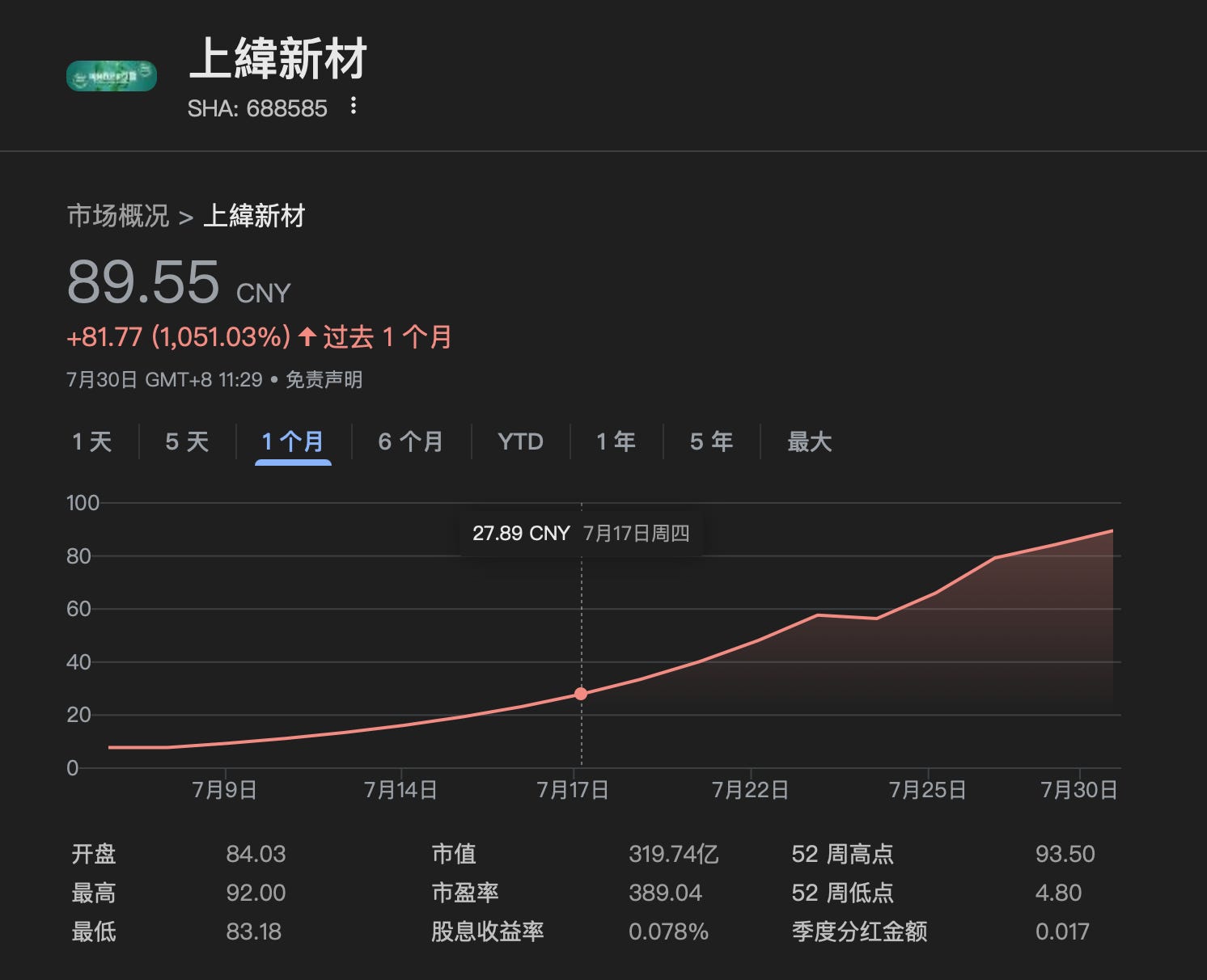
China’s economic policies have significantly shaped market sentiment, propelling the embodied intelligence sector—encompassing AI-driven robotics and autonomous systems—into a position of prominence. A striking example is Zhiyuan Robotics’ acquisition of the A-share listed company SWANCOR(上纬新材) (688585), which saw its stock price surge tenfold in past weeks, reflecting investor enthusiasm for AI-integrated technologies. Despite this fervor, no pure-play AI company, including DeepSeek, a standout in China’s AI landscape, has pursued an initial public offering (IPO). DeepSeek, founded in 2023, has disrupted the global AI market with its cost-efficient R1 and V3 models, yet it remains private. This essay analyzes why DeepSeek has not pursued an IPO, examining the interplay of Chinese economic policy, market dynamics, the company’s strategic priorities, and geopolitical and regulatory constraints.
Chinese Economic Policy and the Embodied Intelligence Surge
China’s strategic focus on AI and embodied intelligence is rooted in policies like the 2017 “New Generation AI Development Plan” and the 2025 AI Industry Development Action Plan, which allocated 1 trillion yuan ($137 billion) to advance AI technologies. These policies have fostered a robust ecosystem, offering subsidies, tax breaks, and computing vouchers to counter U.S. export controls on advanced AI chips. The government’s emphasis on “new quality productive forces” has prioritized AI integration into sectors like robotics, automotive, and manufacturing, driving market optimism. The case of Zhiyuan Robotics’ acquisition of SWANCOR(上纬新材) exemplifies this trend, as investors bet on the potential of embodied intelligence to transform industries, leading to a 10x stock price surge in July 2025.
Zhiyuan Robotics – also known as AgiBot – is a Shanghai-based startup focused on commercializing humanoid robots. In early 2023 it was founded under the leadership of Deng Taihua (a former Huawei executive) – with Huawei “Genius Youth” recruit Peng Zhihui joining as co‑founder and CTO. That year Zhiyuan rapidly unveiled its first humanoid robot, the Expedition A1, and set up mass-production in Shanghai’s Lingang Fengxian factory. By early 2025 the company had built on the order of one thousand robots
and completed multiple funding rounds backed by Tencent, JD.com and other major investors. Zhiyuan’s recent strategy has been to prepare for a public listing via a listed shell: it announced plans to acquire a controlling stake in Shangwei New Materials (formerly tied to Swancor) on the Shanghai Market. Zhiyuan insists this transaction is not a “back-door listing”, but the news nonetheless sent Shangwei’s stock surging (hitting the 20% trading limit on reopening). This rally is widely viewed as a sign of strong investor confidence in Zhiyuan and the broader embodied‑intelligence (humanoid robotics) sector.
DeepSeek, in contrast, has thrived in the same policy-driven ecosystem but has not pursued an IPO. Founded in 2023 by Liang Wenfeng, DeepSeek leverages state-supported infrastructure and talent from top universities like Peking and Tsinghua to develop models like R1, which matches OpenAI’s o1 performance at a fraction of the cost. Backed by High-Flyer, a $8 billion quantitative hedge fund, DeepSeek has access to significant capital and a stockpile of Nvidia A100 chips acquired before U.S. sanctions tightened. Despite its technological success and the bullish market sentiment exemplified by SWANCOR’s rally, DeepSeek’s absence from public markets reflects a combination of strategic, financial, and external factors.
Strategic Prioritization of AGI Research
DeepSeek’s decision to remain private stems from its focus on advancing artificial general intelligence (AGI) rather than immediate commercialization. Unlike Zhiyuan Robotics, which has prioritized market-driven growth through mass production and commercial applications, DeepSeek operates as a research-driven entity. Its hiring strategy emphasizes young PhD graduates from top universities, prioritizing skills over industry experience to foster a collaborative culture focused on unorthodox research projects. Founder Liang Wenfeng has articulated a vision of disrupting China’s “follower” mentality in AI, focusing on efficiency-driven innovations like the mixture-of-experts (MoE) architecture, which optimizes GPU usage and reduces training costs.
High-Flyer’s financial backing provides DeepSeek with ample resources, negating the need for public capital. While Zhiyuan Robotics used the acquisition of SWANCOR to access public markets and fuel expansion, DeepSeek’s reported 5.576milliontrainingcostforV3—likelyunderstated,withestimatessuggestingover1.3 billion in total investment—is covered by High-Flyer’s deep pockets. This financial independence allows DeepSeek to prioritize long-term AGI goals over the short-term revenue pressures that an IPO would introduce. As noted in a Forbes article, DeepSeek’s commitment to cost-efficiency and open-source collaboration positions it as a disruptive force, but its research focus delays the need for public funding.
Geopolitical and Regulatory Constraints
Geopolitical tensions, particularly U.S.-China tech competition, significantly influence DeepSeek’s IPO calculus. U.S. export controls on advanced semiconductors, aimed at curbing China’s AI progress, have forced Chinese firms to innovate with limited resources. DeepSeek’s efficiency-driven approach, using Nvidia’s H800 chips and fewer units overall, has mitigated these challenges, as highlighted in a New York Times article. However, going public could expose the company to heightened scrutiny from U.S. and allied regulators. DeepSeek has faced allegations of intellectual property violations and data privacy concerns, with countries like Italy, Australia, and Canada imposing bans or restrictions due to non-compliance with regulations like the EU’s GDPR. An IPO, particularly on a foreign exchange like the U.S. or Hong Kong, would amplify these risks, subjecting DeepSeek to rigorous audits and potential sanctions.
Domestically, China’s regulatory environment adds further complexity. The goverment maintains tight control over the tech sector, as evidenced by the 2020–2022 “Crackdown Era” when it reasserted authority over tech giants like Alibaba. DeepSeek’s designation as a “national high-tech enterprise” by authorities grants it tax breaks and subsidies but ties it closely to central goverment strategic goals. A Reuters report notes that DeepSeek’s success has been noticed in China’s top political circles, with Liang attending a symposium hosted by Premier on January 20, 2025, signaling its role as a “national prototype” for technological autonomy. An IPO could dilute this alignment, as public shareholders might demand a focus on profitability over national priorities. China’s Anti-Monopoly Law and restrictions on foreign investment in strategic sectors further limit DeepSeek’s ability to attract international capital through an IPO, unlike Zhiyuan Robotics, which has leveraged domestic investment to scale.
Market Dynamics and Open-Source Strategy
DeepSeek’s open-source strategy is a critical factor in its decision to avoid an IPO. By releasing R1 and V3 as open-source models under the MIT License, DeepSeek prioritizes accessibility and global adoption over monetization. This approach has spurred rapid integration into platforms like Alibaba Cloud, Huawei Cloud, and Microsoft Azure, with over 700 open-source derivatives reported. However, it reduces immediate revenue potential, as DeepSeek’s API pricing—2 RMB per million tokens, about 1% of ChatGPT-4 Turbo’s pricing—limits profitability. A World Economic Forum article highlights that DeepSeek’s open-source model democratizes AI, enabling smaller companies and developers to build on its technology, but this focus on ecosystem integration over revenue makes it less attractive to IPO investors seeking short-term returns.
In contrast, Zhiyuan Robotics has pursued a commercial strategy, focusing on mass production and real-world applications. Its robots, such as the Yuanzheng, Lingxi, and Genie series, target industries like manufacturing and logistics, with a reported 962 units produced by December 2024. This commercial focus, coupled with investments from Tencent and JD.com, aligns with investor expectations for profitability, as evidenced by the SWANCOR acquisition’s market impact. DeepSeek’s open-source approach, while aligned with China’s “good enough” engineering culture and AI+ initiative for real-economy integration, delays its IPO prospects by prioritizing widespread adoption over financial returns.
Economic and Market Sentiment Challenges
While Chinese economic policy has boosted market sentiment, as evidenced by the 34% surge in the MSCI China Index in early 2025, the broader economic context poses challenges for AI startups considering IPOs. China’s economy faces structural issues, including weak overall growth and tariff uncertainties, which could dampen investor appetite for high-risk, low-profit ventures like pure-play AI companies. DeepSeek’s reported training costs of 5.576millionforV3,whilesignificantlylowerthanWesterncounterparts,arelikelyunderstated,withestimatessuggestingtotalinvestmentsexceeding1.3 billion. Such discrepancies could raise concerns about transparency, a critical factor for IPO-bound companies.
The embodied intelligence sector, while promising, remains nascent, with high development costs and uncertain profitability timelines. Zhiyuan Robotics’ success in scaling production and securing orders, such as a 78 million yuan deal with China Mobile, positions it favorably for public markets. DeepSeek, however, benefits from High-Flyer’s financial stability, reducing the urgency to seek public capital. As noted in a CNBC article, the “DeepSeek moment” has spurred investor interest in Chinese AI, but regulatory uncertainty and a weak venture capital market could delay IPOs for pure-play AI firms.
Comparison of DeepSeek and Zhiyuan Robotics
AspectDeepSeekZhiyuan Robotics (AgiBot)Founded2023, Hangzhou, Zhejiang2023, Shanghai, Lingang New AreaFocusAGI research, open-source LLMs (R1, V3)Commercial humanoid robots (Yuanzheng, Lingxi, Genie series)FundingBacked by High-Flyer ($8 billion hedge fund)$84.2M from Tencent, JD.com, othersCommercializationLimited; focuses on low-cost APIs and ecosystem integrationMass production (962 units by Dec 2024), targeting industrial applicationsIPO StatusNo plans announced; research-driven, financially independentSpeculated listing via SWANCOR (688585) acquisition, denied as back-doorMarket ImpactTriggered global AI stock sell-off; no direct revenue focus10x stock surge for SWANCOR post-acquisition announcement
Conclusion
DeepSeek’s decision to forgo an IPO is a strategic response to its research-driven mission, financial independence through High-Flyer, geopolitical risks, China’s regulatory environment, and its open-source business model. Chinese economic policy has propelled the embodied intelligence sector forward, as seen in Zhiyuan Robotics’ market success, but DeepSeek’s focus on AGI and accessibility over profitability sets it apart. While Zhiyuan capitalizes on commercial applications and investor enthusiasm, DeepSeek’s role as a “national prototype” aligns with Beijing’s goal of technological autonomy, reducing the incentive for a public listing. As China navigates the U.S.-China tech competition, DeepSeek’s trajectory will remain a critical case study in balancing innovation and market dynamics.