
Behind the Showcase: Why Chinese and American Humanoid Robots Look So Different
Published:
Originally published on Substack.
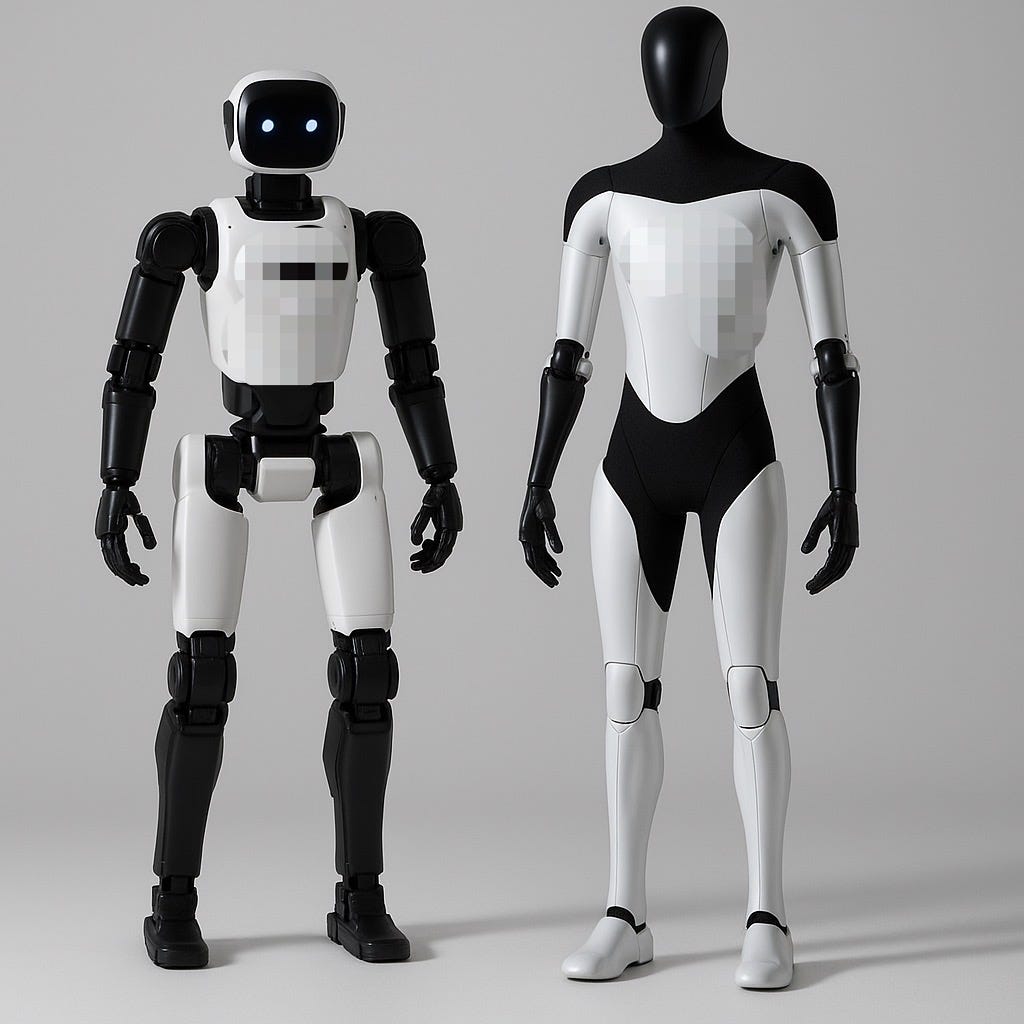
In 2025, humanoid robots have emerged as a global tech spotlight. Both Chinese and American companies are rolling out machines with impressive physical capabilities or service functionality. But a noticeable divergence has taken shape in how these robots are presented to the public:
Chinese companies favor dramatic displays — flips, martial arts, dancing, and coordinated performances.
American firms typically demonstrate practical service tasks — folding laundry, delivering food, warehouse operations, or assisting the elderly.
This contrast isn’t random. It reflects deeper structural differences in how capital is deployed, how media narratives are shaped, and where each country’s robotics industry currently stands.
Venture Capital Expectations: Storytelling vs. Scenario Validation
China: Narrative-driven, breakthrough-focused, early-stage capital
China’s venture ecosystem has long been shaped by a “capital pushes technology” model. With strong government support, humanoid robots have been designated as a “strategic emerging industry.” Funding moves quickly, and competition is fierce. According to ITJuzi, over 63% of humanoid robotics deals in China in 2024 were Pre-A or earlier, with investors focusing on founders’ backgrounds, technological barriers, and visual demos.
To gain traction, startups often turn to visually striking performances to tell a compelling story of the future. Examples include:
Unitree’s G1 doing continuous backflips at tech expos, sparking viral buzz;
Fourier Intelligence blending robotic rehab with choreographed dance;
Humanoid robots on China’s Spring Festival Gala, dancing to symbolize cultural pride fused with cutting-edge innovation.
At these early stages, technical novelty and online attention often outweigh immediate usability. A robot capable of acrobatics or sparring — even if far from commercial deployment — helps signal a competitive edge.
U.S.: Scenario-focused, economics-driven, cautious post-Series A capital
In contrast, American robotics firms operate in a more mature and data-driven venture landscape. Companies like Figure AI, Agility Robotics, Boston Dynamics, and Tesla focus on concrete deployment scenarios from day one.
American investors — especially from Series A onward — tend to ask:
Can the robot function reliably in a real-world environment?
Will it reduce labor costs or improve efficiency?
Are its lifecycle costs justifiable?
Are safety and liability risks adequately addressed?
Hence, U.S. demos tend to center on practical performance. Tesla’s Optimus folding laundry or serving food is not a spectacle, but a validation of its flexible manipulation system. This approach better aligns with B2B use cases in logistics, retail, and eldercare.
Media Logic: Visual Buzz vs. Trust-Building
Chinese social media thrives on “visual proof”
On platforms like Douyin, Xiaohongshu, and Bilibili, Chinese audiences are drawn to visually intense performances — flips, dances, even robotic fights. These eye-catching demos don’t necessarily imply real-world readiness, but they are highly shareable, often paired with nationalist or futuristic narratives like:
“Our robot made it to the Spring Festival Gala.”
“Chinese flips beat Boston Dynamics!”
Many companies now hire visual algorithm teams to optimize camera angles, lighting, and choreography — not for product documentation, but to maximize viral traction.
U.S. media focuses on credibility and real-world utility
On platforms like YouTube, Reddit, and TechCrunch, American audiences tend to focus on functionality, safety, and use cases — especially for vulnerable groups like seniors or people with disabilities. Public discourse often touches on system design, redundancy, cost of deployment, and regulations.
U.S. companies, as a result, avoid theatrics. Figure AI explicitly states it “does not engage in meaningless performance demos.” Agility’s warehouse retrieval demos are all filmed in live operational settings.
Will the Two Worlds Converge?
In the short term, these differences will likely persist. But in the long run, convergence may be inevitable:
Chinese companies will eventually shift from visual demos to pilots in hotels, malls, or airports, emphasizing actual utility;
U.S. companies may also need to improve dynamic capabilities for more natural human-robot interaction.
Ultimately, successful humanoid robots may need to both move like athletes and work like professionals. The first to balance these two capabilities may dominate the global market.
Final Thought: Two Strategies, One Long Race
The contrast between Chinese and American humanoid robot demos isn’t just aesthetic — it reflects the interplay of investment strategies, cultural narratives, policy support, and industrial maturity.
Showmanship and utility aren’t mutually exclusive; they represent different phases of a long innovation cycle. Recognizing these nuances helps us better understand where the future of humanoid robotics is heading — and who might lead it.
For further reference:
ITJuzi: 2024 China Humanoid Robotics Investment Report
CB Insights: Global Robotics Funding Overview Q1–Q2 2025
Gartner: Humanoid Robotics Hype Cycle 2025
Tsinghua AI Institute: Humanoid Robotics Application White Paper (2025)