
Why First-Time Founders Love Startup Competitions—and Serial Entrepreneurs Often Stop Showing Up
Published:
Originally published on Substack.
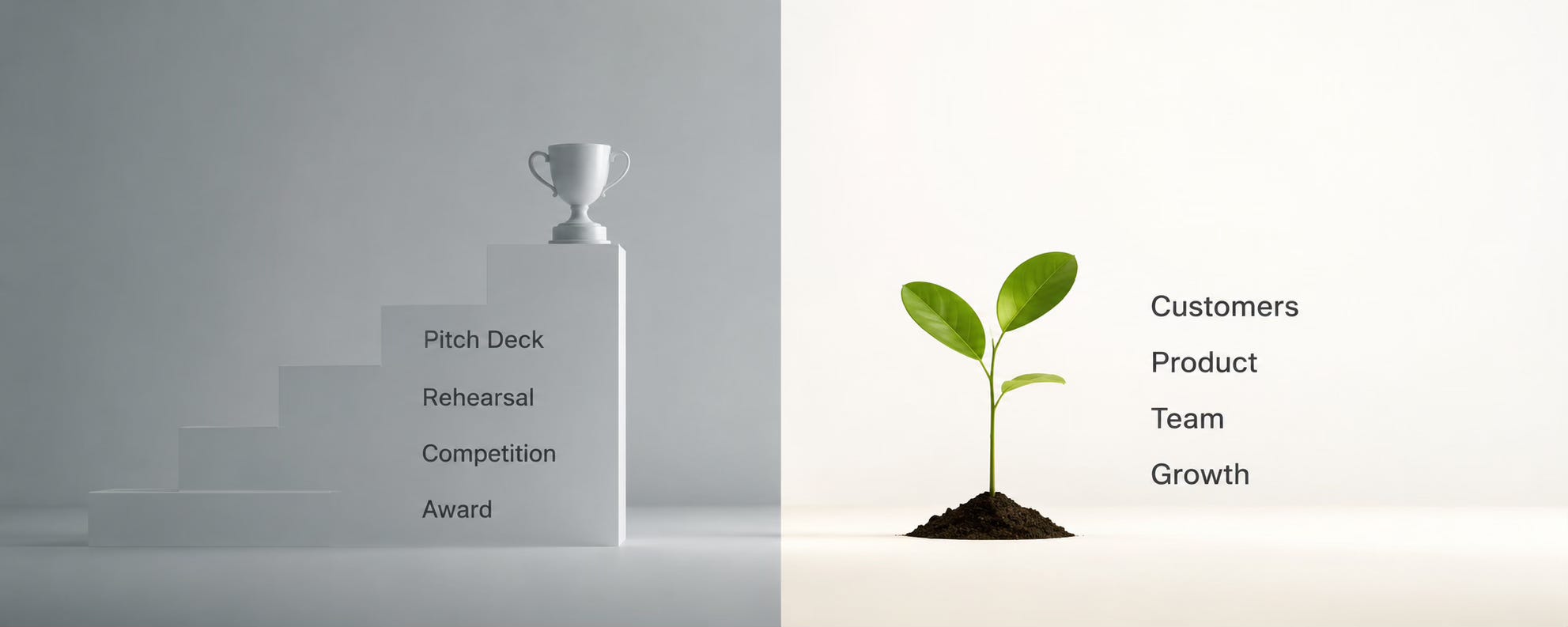
Most founders enter their first startup competition with genuine excitement.
They polish their pitch deck, rehearse every slide, and hope to win an award, meet investors, or even secure funding.
By the time they launch their second company, many of them have quietly disappeared from the competition circuit.
Not because they’ve become less ambitious, but because they’ve learned that the outcome is rarely decided by the ten minutes on stage.
The first time around, it’s easy to see a startup competition as a test.
Build a compelling business plan, deliver a great pitch, impress the judges—and success should follow.
Experience tends to change that perspective.
Long before the presentations begin, much of the context is already known: the founding team, previous funding, industry relationships, strategic fit, local priorities, and the company’s ability to execute. The pitch still matters, but it’s only one input in a much larger decision-making process.
That doesn’t mean startup competitions are inherently unfair.
It simply reflects how resources are allocated.
The same is true in venture capital, enterprise procurement, and strategic partnerships. Rarely is an important decision based on a single presentation alone.
What ultimately drives many experienced founders away isn’t the belief that competitions are “prearranged.”
It’s the opportunity cost.
Preparing for a competition can consume weeks—refining slides, rehearsing, traveling, and waiting for results.
The same time could be spent talking to customers, improving the product, hiring key people, or shipping another release.
If a competition doesn’t create meaningful business opportunities, its priority naturally declines.
Many serial entrepreneurs still participate in startup competitions.
But their motivation has changed.
They’re no longer chasing trophies. They’re looking for strategic partners.
They’re not seeking publicity. They’re looking for customers.
They’re not trying to prove themselves. They’re trying to build the business.
The first startup is often about earning recognition from judges.
The second is about earning validation from the market.
Because trophies belong on the wall.
Customers belong on the balance sheet.