
The xAI Lawsuit Against Li Xuechen: What’s Really at Stake
Published:
Originally published on Substack.
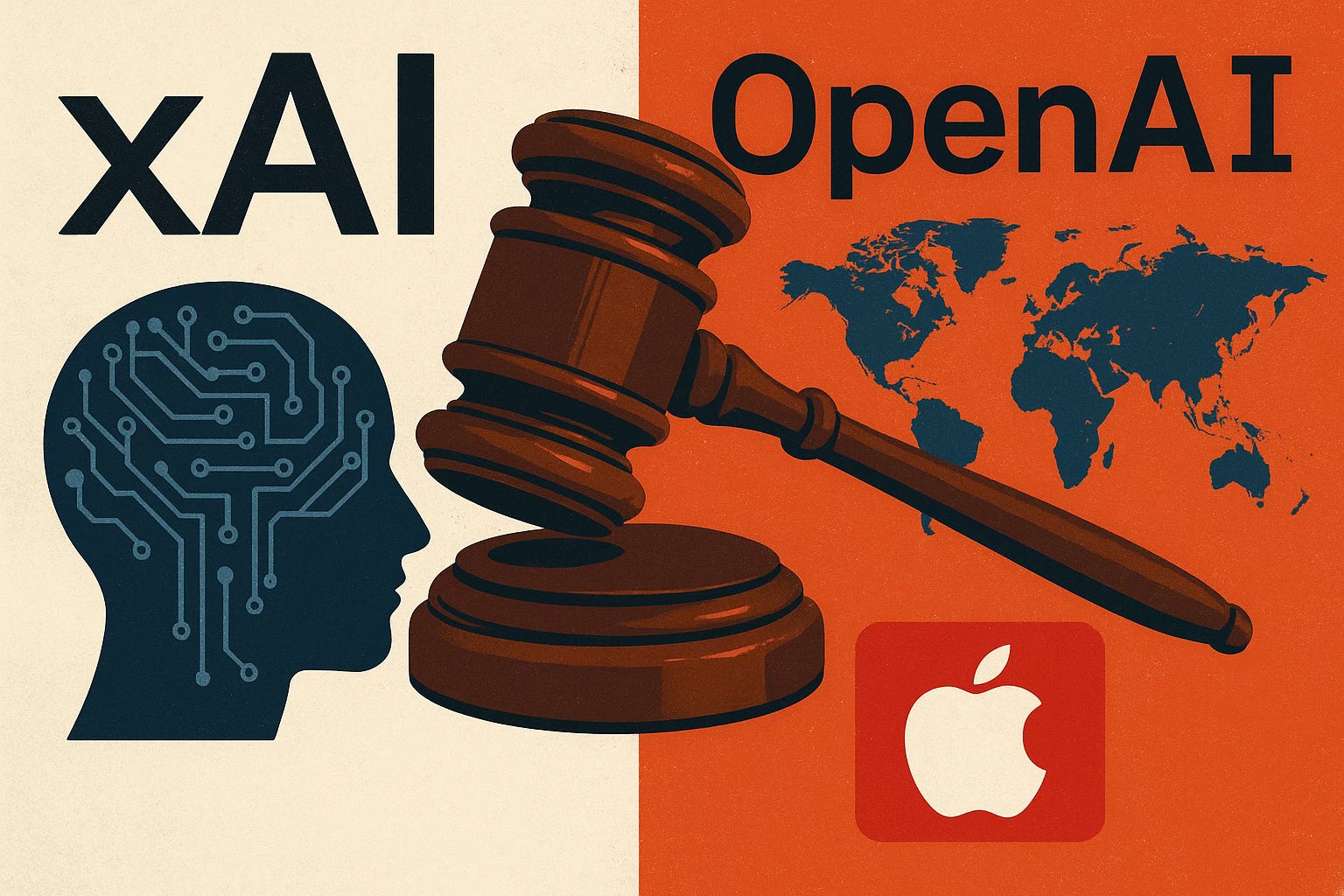
When Elon Musk’s xAI filed a lawsuit against Li Xuechen, it immediately raised eyebrows. On paper, it’s just another case about intellectual property and alleged misuse of sensitive company materials. But dig a little deeper, and you’ll see that this is not only about one engineer or one company. It touches the rivalry between Musk’s xAI and OpenAI, the global race for dominance in artificial intelligence, and even the question of whether nationality can still be used as a political weapon in today’s high-stakes tech world.
Who is Li Xuechen?
Li isn’t a household name, but in the AI world he’s known as a skilled researcher and engineer. Born in China, he later became a Canadian permanent resident and built his career in North America. His background is in machine learning and large-scale model systems—the exact kind of expertise companies like xAI, OpenAI, and Anthropic are desperate to have.
That’s important: there aren’t many people who can design, optimize, and scale foundation models at the level needed for cutting-edge AI. So when someone like Li moves between companies, it’s natural for lawsuits or disputes to follow, because the line between “general expertise” and “trade secrets” is blurry.
xAI vs. OpenAI: A Family Feud
The lawsuit can’t be separated from the bigger story: the split between Musk and OpenAI. Musk was an early supporter and funder of OpenAI, back when it was a nonprofit with the mission of making AI safe and open. But after OpenAI pivoted to a capped-profit model and partnered with Microsoft, Musk walked away—and later launched his own rival, xAI.
So when xAI accuses Li of misusing or mishandling sensitive data, the case isn’t happening in a vacuum. It’s part of the growing battle between two camps: OpenAI/Microsoft on one side, and Musk’s xAI (with Tesla, SpaceX, and Twitter/X as its ecosystem) on the other. Both are racing to build bigger, smarter, more profitable AI models—and both know that a handful of key researchers can tilt the balance.
The AI Talent War
This is where Li fits in. The global AI race isn’t just about GPUs or data centers. It’s about people. High-end AI engineers are as valuable as oil fields in this new economy. Recruiters quietly call them “unicorns”—rare, expensive, and often fought over.
So when someone leaves a place like xAI and moves toward a rival ecosystem, lawsuits often follow. Even if the legal grounds are shaky, companies use litigation as a signal: “Our secrets are valuable. We’ll defend them.” It’s also a way to slow down competitors by dragging talent into legal limbo.
The Geopolitical Card
Now here’s where things get even trickier. Li is Chinese by birth, but a Canadian permanent resident. In today’s geopolitical climate, that matters. U.S.–China tensions over tech are running hot. Washington has already banned the export of advanced chips to China, and both countries are pouring billions into their domestic AI industries.
That raises the question: if you’re Chinese-born and working in North America on frontier AI, does your nationality become a liability? Could a company—or even a government—frame you as a potential risk simply because of where you were born?
We’ve seen this play out before in other industries. Chinese-born scientists in the U.S. have been accused of espionage, only for charges to be dropped later. Even if nothing illegal happened, careers were destroyed. This is why the Li case feels bigger than one lawsuit. If Musk’s team leans on Li’s background, intentionally or not, it could fuel suspicions that any Chinese-born AI researcher is a “security risk.” That would have chilling effects across the industry.
What’s Really at Stake
If we zoom out, this lawsuit is just one skirmish in a much larger war:
The business war: xAI, OpenAI, Anthropic, and Google DeepMind are all racing to control the next generation of AI. Whoever wins sets the standards, captures the talent, and takes the lion’s share of profits.
The talent war: People like Li are the scarce resource. Each side will fight to keep them, poach them, or block them from switching teams.
The geopolitical war: The U.S. and China see AI as a national security issue, not just a business one. That means the nationality of an engineer can suddenly matter as much as their code.
The real danger here is that individual researchers—like Li—end up caught in the crossfire. They become pawns in a much bigger game between billion-dollar companies and rival governments.
Final Thoughts
This isn’t just a courtroom story. It’s a window into how fragile the AI industry is right now. On the surface, it’s about one engineer and one lawsuit. But underneath, it’s about Musk’s grudge with OpenAI, the global scramble for AI dominance, and how easily nationality can be turned into a political weapon.
In the years ahead, expect more of these cases. As the AI race heats up, lawsuits will become another tool of competition. And people like Li—skilled, mobile, and caught between worlds—will keep finding themselves in the spotlight, whether they want it or not.