
Why Embodied AI Needs Local AI: A Practical Reality
Published:
Originally published on Substack.
Everyone is talking about Anthropic restricting access to Fable for non-U.S. citizens. By itself, this may not seem like a major issue—people can simply switch back to other models. But the reaction has not been an overreaction at all.
Because it clearly exposes a reality that has never changed: every country acts according to what it believes best serves its own interests. In the AI era, many people had not fully appreciated this fact. Now, they are starting to wake up to it.
Imagine a future where Fable has been widely deployed in humanoid robots, national infrastructure, hospitals, factories, and even ordinary homes. Then, with a single policy decision or remote command, an entire country’s critical systems could be disrupted or disabled. That is a frightening scenario.
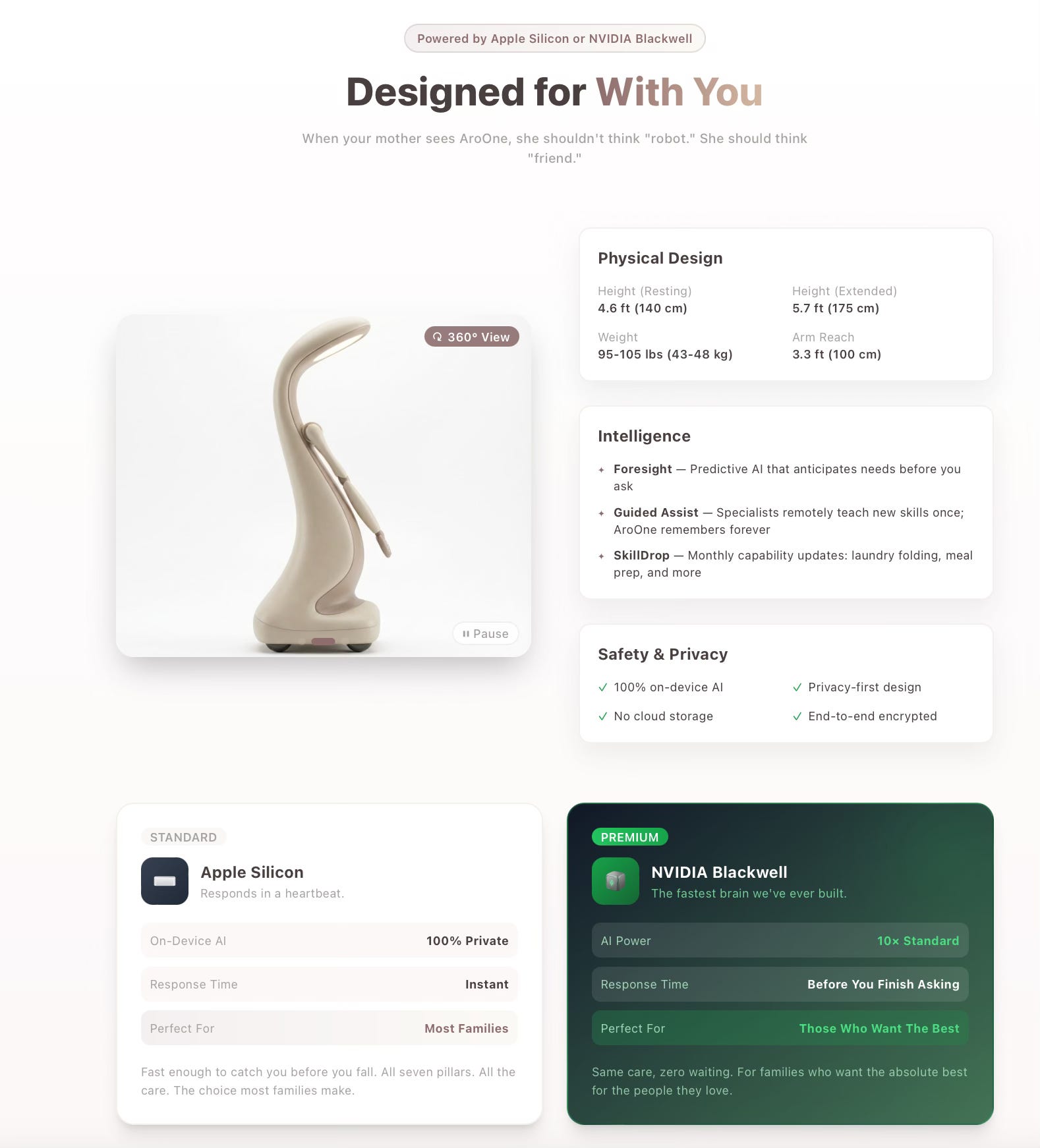
After leaving Qianxun last year, I designed a conceptual eldercare robot called AroOne. One of its core AI design principles was straightforward: local model deployment and on-device inference.
A truly reliable humanoid robot—the kind people can trust and depend on—must be able to operate locally. This is especially true for companion robots. They should perform AI inference on-device, function completely offline when necessary, and remain independent of external cloud services.
The discussion around Fable is not really about one model or one company. It is a reminder that autonomy, resilience, and trust are not optional features in embodied AI—they are foundational requirements.