
Embodied AI Needs More Moments of Humility
Published:
Originally published on Substack.
I’ve been grinding in the robotics field for years—from industrial automation to today’s AI-driven projects. I’ve seen way too many technologies shine in the lab only to fizzle out in the real world. Lately, catching wind of 1X Technologies’ news—their pivot from romantic home robot pre-sales to bulk industrial deployment with EQT (supplying thousands of NEO humanoid robots for manufacturing, logistics, and healthcare from 2026-2030)—I couldn’t help but nod in agreement: Isn’t this exactly the kind of “strategic retreat” I shared on the quoted 6 months ago ?
Combining my quadruped robot geological exploration project with 1X’s move highlights a hard truth in robotics commercialization: Don’t let ambition blind you; the real world is the ultimate test.
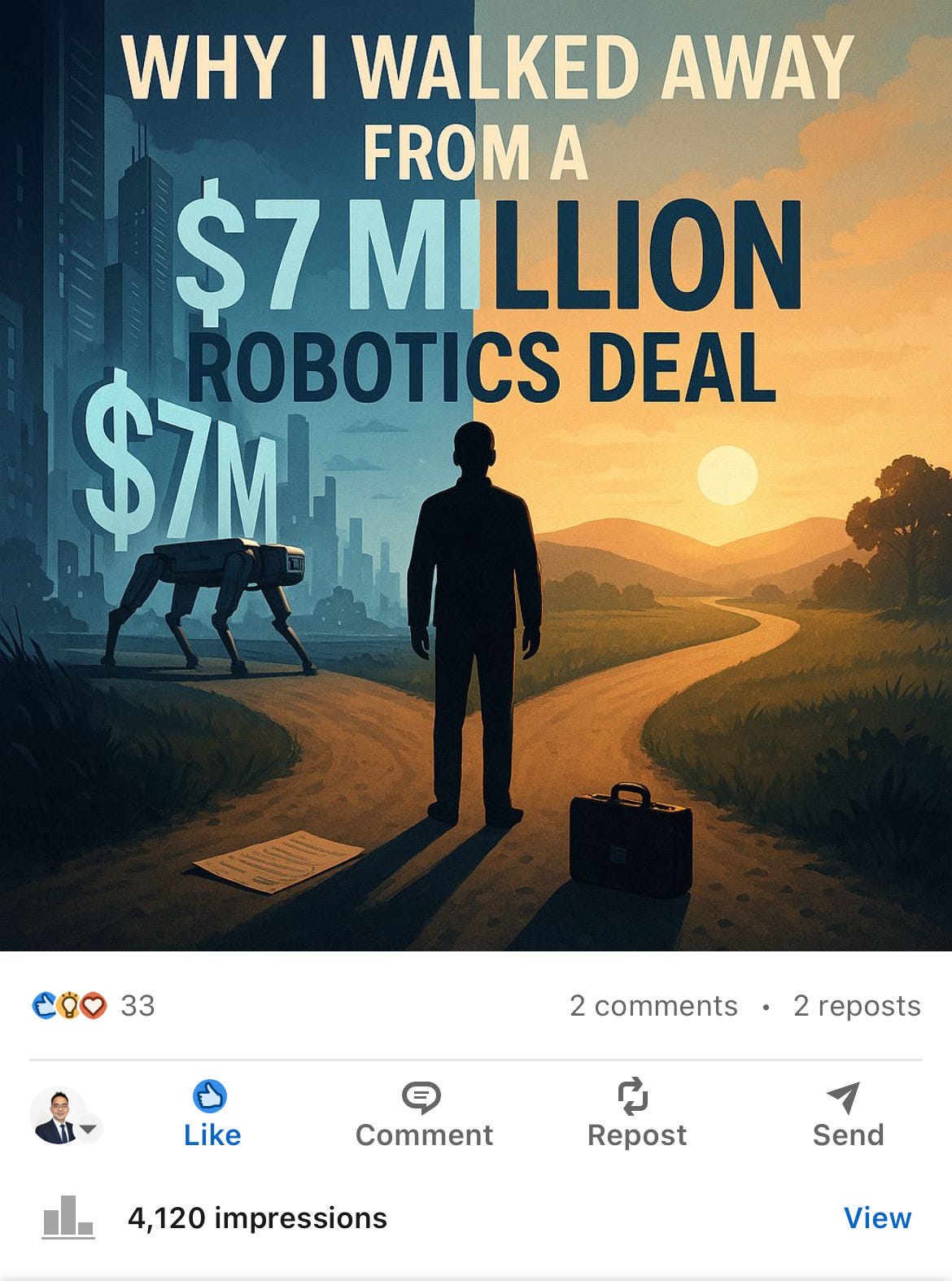
Flash back to my $7 million project: The client needed quadruped robots to autonomously navigate unmapped terrain—rocky hillsides, riverbeds, dense forests, loose gravel, wetlands, even snow-covered areas. It sounded like a sci-fi blockbuster, right? But after back-and-forth evaluations with top manufacturers in Asia, the US, and Europe, I chose to walk away. Why? Current tech just isn’t there yet on field stability, power consumption, environmental perception, and locomotion algorithms. They can elegantly hop obstacles in the lab; but hit a muddy riverbed or snowy slope, and it’s game over—tipping over, draining batteries, or getting lost. Forcing it through wouldn’t just screw the client; it’d tarnish the whole industry’s rep with another “robots overhyped again” story.
Now, look at 1X’s play: They could’ve kept hawking NEO as a “life-changing home companion” ($20K a pop, $499/month subscription), but reality took a bite. Home environments are messier than geological surveys—picture kids chucking toys, pets darting around, kitchen grease slicks—that’s hell for AI training.
Instead, pivoting to industry: standardized tasks, controlled settings, clear ROI (efficiency gains amid labor shortages). It’s a mirror to my call: Not ditching the dream, but prioritizing smartly. Industrial rollouts rack up data fast, cut costs, build trust—just like EQT partner Ted Persson put it, “empowering workers” rather than replacing them. Once the tech’s battle-tested, home or wild-field apps will follow naturally.
Bernt Børnich must be happy(but tough to make decisions) about this pivot—it dodges my exact pitfalls: Don’t burn cash in unready domains. Conversely, if that client circles back, I’d pitch a hybrid: Validate quadrupeds in industry first, then scale to geology. At the end of the day, this industry needs more “humility moments” like these. Tech sparks wild ambition, but execution demands we face our limits head-on.
1X’s shift leaves me optimistic: Robots aren’t some overnight utopia of abundance; they’re a step-by-step marathon.
By the way, I got my refund from 1X!